
Reviewed · HISTORICAL TOURS
How: Tour of the historic center
This walk through Como’s historic center is interesting because it hits the big ideas fast, medieval entry, Roman traces, Gothic cathedral, then the lake air. I love the way Porta Torre sets the mood with real medieval stone, and I love how the Duomo di Como turns into something you can actually walk into and look around. One thing to consider, some highlights are exterior or photo stops, including the Voltiano area and the World War I monument.
You’ll meet in front of the Liceo Volta right next to Torre Porta, then follow a route that mixes grand monuments with the kind of everyday squares where you feel the rhythm of the town. The guide gives explanations in Spanish, with plenty of detail and stories that make the architecture easier to picture.
The tour is listed at 2 hours, while the main guided route is about 1 hour 30 minutes, so it’s a focused hit of the center, not a slow museum day. If you want a long sit-down break inside every building, you may want to plan extra time on your own after the walk.
Key highlights you will feel right away
- Porta Torre entry, plus time to walk around and get oriented in Como’s old-city edge
- Piazza San Fedele details, including the Roman Forum connection and the famous dragon portal
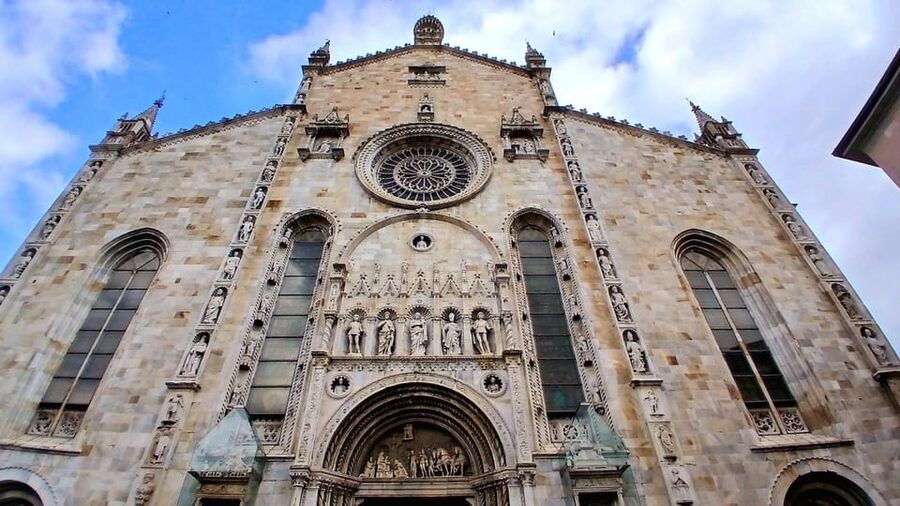
- Duomo di Como inside access, so you can see the Gothic façade and then step into the interior
- Lake Como photo stop from Piazza Cavour, with the town’s social heart and lake views together
- Alessandro Volta connection at Tempio Voltiano, explained even if you do not go into the museum
- A reflective ending at Monumenti ai Caduti, honoring those lost in World War I
Como in 2 hours, a guided walk that actually makes the city click
Como can feel like a postcard, but the center is where the story becomes clear. This tour is built for that moment when you stop seeing a list of sights and start understanding how the city grew, from medieval walls to Roman-era echoes, then to Gothic faith and civic life right by the lake.
The best part is that you do not just look from the outside. You enter key buildings at Porta Torre, into the Church of San Fedele, and into the Duomo di Como. That choice matters because architecture is hard to decode at a distance. Walking through those doorways is the difference between spotting a monument and understanding why people cared about it.
I also like that the route includes the squares where modern Como still happens. Piazza Cavour, with its lake-facing open space, helps you connect the historic core to the reason people come here in the first place.
More history walks in Como:
- Historic Milan Tour with Skip-the-Line Last Supper Ticket
★ 4.5 · 1,976 reviews - Milan: Fresh Pasta and Tiramisù Class in A Historical Home
★ 4.9 · 195 reviews - Step Into History: Leonardo Vinci’s Last Supper Tour
★ 4.5 · 175 reviews
Starting at Liceo Volta by Torre Porta, where your bearings get set
Your meeting point is in front of the Liceo Volta, next to Torre Porta. The starting location is listed as Largo Gianfranco Miglio 8, so if you’re mapping it, treat the Liceo Volta and the Torre Porta area as your anchor.
This start is smart because Porta Torre is not only a photo spot. It is the medieval gate that marks the entry to the old city, so the tour begins with context, not chaos. You get a guided sense of direction before you hit the tighter streets and the bigger plazas.
Since the guide is Spanish, it helps to arrive ready to listen closely for names and dates, especially around the church and cathedral. If you follow along with the main story, the rest of Como’s center makes more sense on the walk and after it.
Porta Torre, a medieval gate you can walk around and then enter
The first monument is Porta Torre, an imposing medieval gate that marks the boundary of Como’s old city. The big detail here is the 12th-century architecture. Even if you are not an expert in medieval design, the guide’s pacing helps you notice what makes it feel both sturdy and ceremonial.
You start with a photo stop and a guided walkthrough around the gate. Then you enter. That sequence helps because you can compare what you see outside, proportions, textures, and how the space transitions once you’re inside.
Practical tip: this is a good moment to take a few photos quickly, before the tour moves into the squares. If you like street photography, Porta Torre gives you a strong frame and a clear sense of the old-city edge.
Piazza San Fedele, Roman forum echoes and the dragon portal
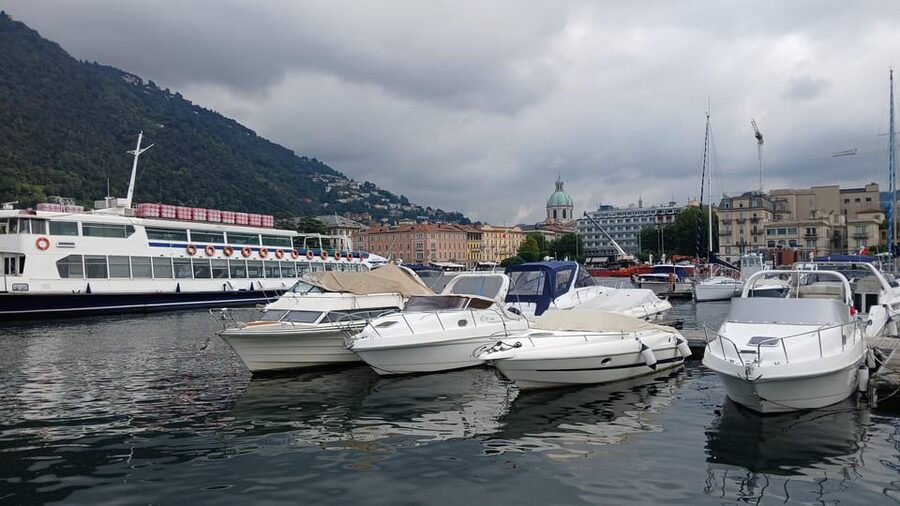
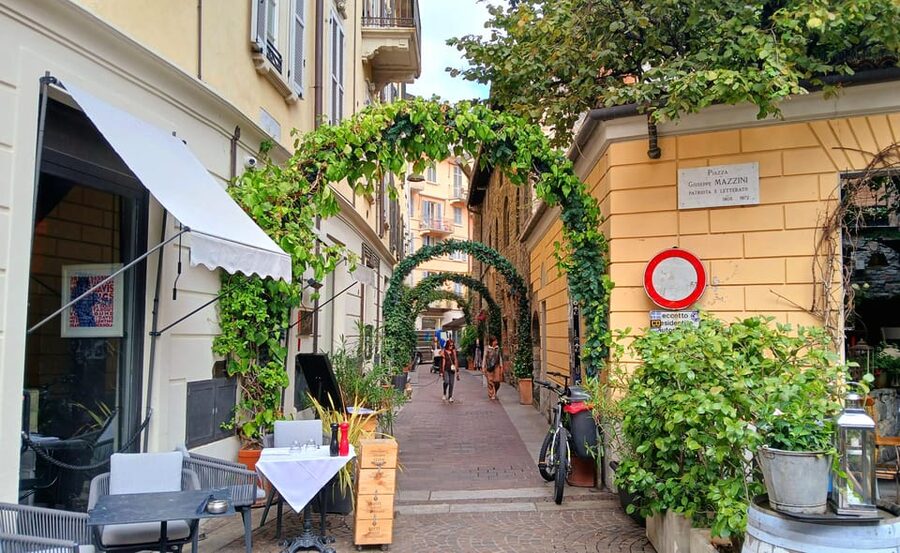
From Porta Torre, the route moves to Piazza San Fedele, a charming square surrounded by historic buildings. You get told that the area was once the site of the Roman Forum. That is a useful note, because it changes how you read the square. Instead of seeing it as just a pretty open space, you can imagine the layered city beneath your feet.
You also get a look at the everyday side of the town. The square has cafes and local boutiques, which gives you a natural pause point. You are not forced into a museum rhythm. You’re in a place where people still come out to meet, browse, and linger.
The signature moment here is the Church of San Fedele, including the famous dragon portal. You’ll see it, then you’ll enter the church. Going in matters because Romanesque churches work through volume and details, and you cannot really judge them from the street.
What I like about this stop is that it mixes legend-level visuals, like the dragon portal, with concrete architecture. When you can see both, the city feels more human. It’s not just a theme park of old buildings, it’s a living place that kept symbols and traditions across centuries.
A different kind of day out of Milan:
- Lake Como: Shared Boat Tour with Prosecco Aperitif
★ 4.6 · 1,452 reviews - Como: Lake Como Shared Boat Tour
★ 4.5 · 804 reviews - Lake Como: Villa del Balbianello Gardens with Ferry Tickets
★ 4.2 · 206 reviews - Lake Como: 3-Hour Boat Rental
★ 4.6 · 185 reviews
Entering the Duomo di Como, Gothic façade to the interior you can walk through
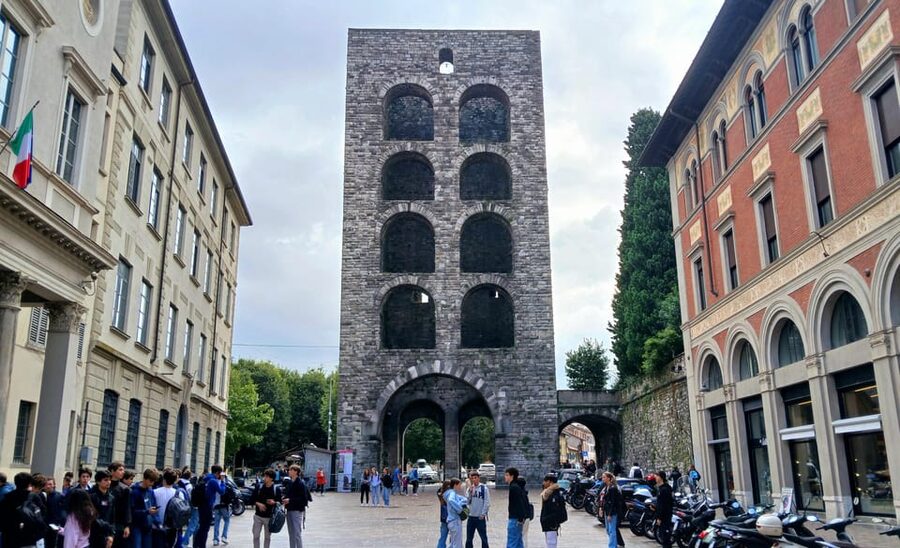
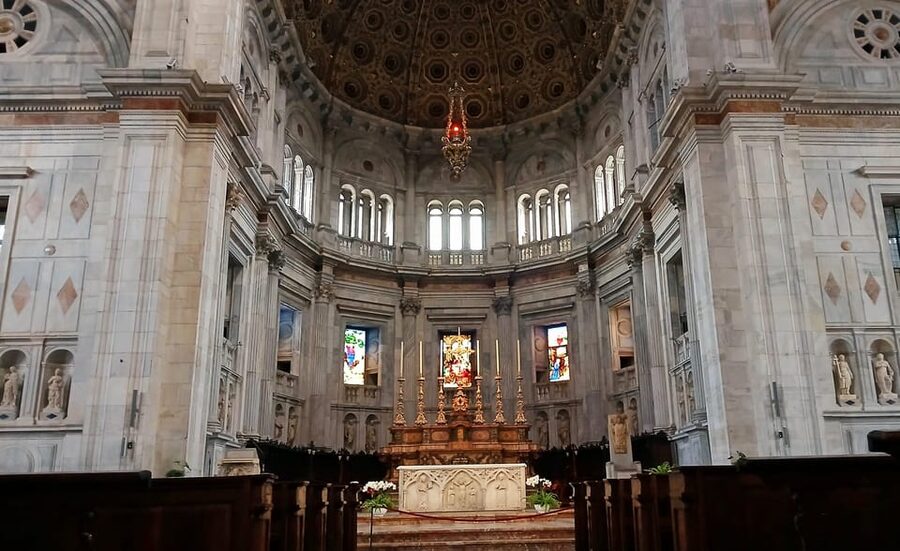
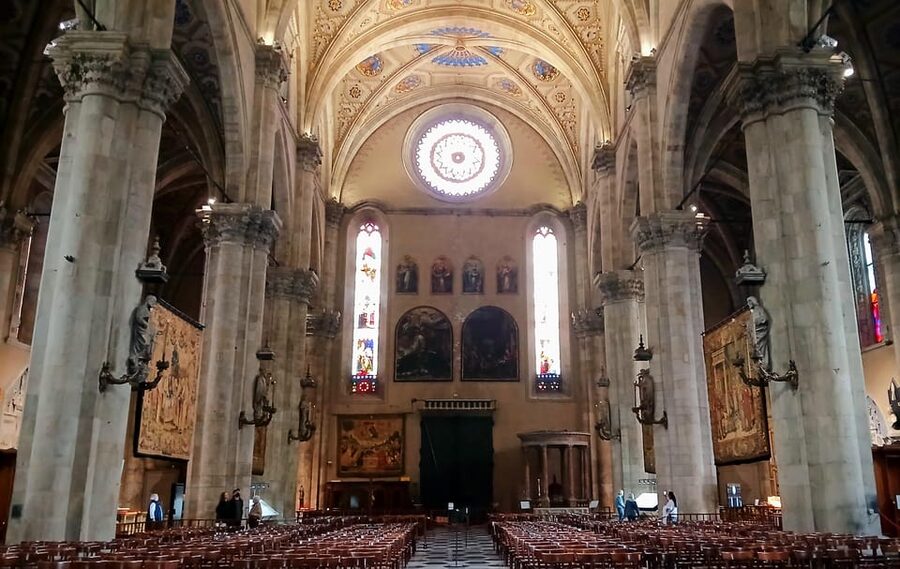
The Duomo di Como is one of Italy’s important cathedrals, and the tour treats it like that. You get a photo stop on the outside to take in the Gothic façade, then you enter and explore the interior.
This is the stop that tends to pull your attention first, but the guide helps you slow down. Gothic design is not only about height and drama. It is about pattern, light, and how the space is shaped for devotion and ceremony.
A practical note: cathedral interiors can feel cooler than the street, and stone surfaces absorb sound. Wear layers you can manage, and plan to move slowly once you’re inside. If you rush, you miss what makes the building work.
This is also where Ignacio Rios style shows up, at least the way I’d expect it based on how he teaches. He pairs detailed explanations with small anecdotes, so the cathedral starts to feel like a story with characters, not a static monument.
Piazza Cavour and Lake Como views, the town’s social center in your line of sight
Next comes Piazza Cavour, the heart of Como’s social life, with views over Lake Como. Even if you’re only there briefly, the location does half the work for you. The lake is the backdrop, and the square is the stage.
You’ll walk around Piazza Cavour, and you’ll get a Lake Como photo stop. This combination is a nice reset. After the heavier stone stops, the open views make everything feel lighter and more connected to why people travel here.
What you should take from this stop: it bridges old Como to modern Como. The historic core is here, but the lake is not a separate postcard area. It is part of daily life and city identity, and you get that sense more clearly when a guide positions you with the square first, then the view.
Tempio Voltiano and Alessandro Volta, a monument tied to electricity
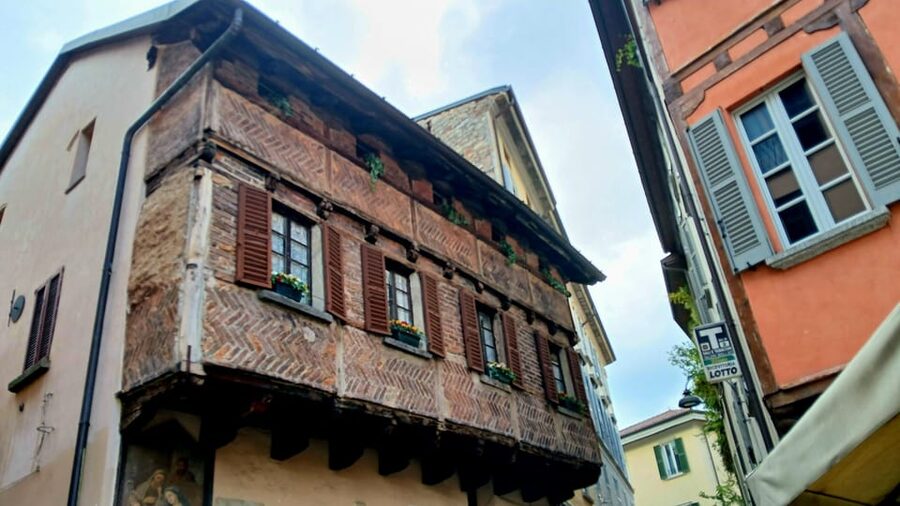
After the lake-facing moments, you walk to Tempio Voltiano, a monument dedicated to Alessandro Volta, inventor of the electric battery. You will see the site and learn about it, and you will not enter the museum.
Still, the explanation is useful because it places Volta in a broader cultural frame. The museum houses memorabilia and objects related to his life and work. So even without going inside, you understand what you would be missing if you skip this area later.
If you are curious about science in a travel setting, this stop is a satisfying bridge. You are moving from cathedral stone and church symbols to a theme of invention and discovery, all without leaving the center.
Monumenti ai Caduti, a quiet World War I tribute near the end of the route
The tour finishes at the Tempio Voltiano area, and you also get to see the Monumenti ai Caduti, a tribute to those who fell in World War I. You will not enter this monument.
Because it is not entered, your focus is on the message and the place. Even if you are not a history buff, this kind of stop adds weight to the walk. It shifts the tone from architecture and views to remembrance, which can be surprisingly meaningful after a couple of hours of sight-seeing.
If you like tours that respect both beauty and seriousness, this ending works well. It gives you something to carry back with you when the photos are done.
Who this tour fits best, and who should plan differently
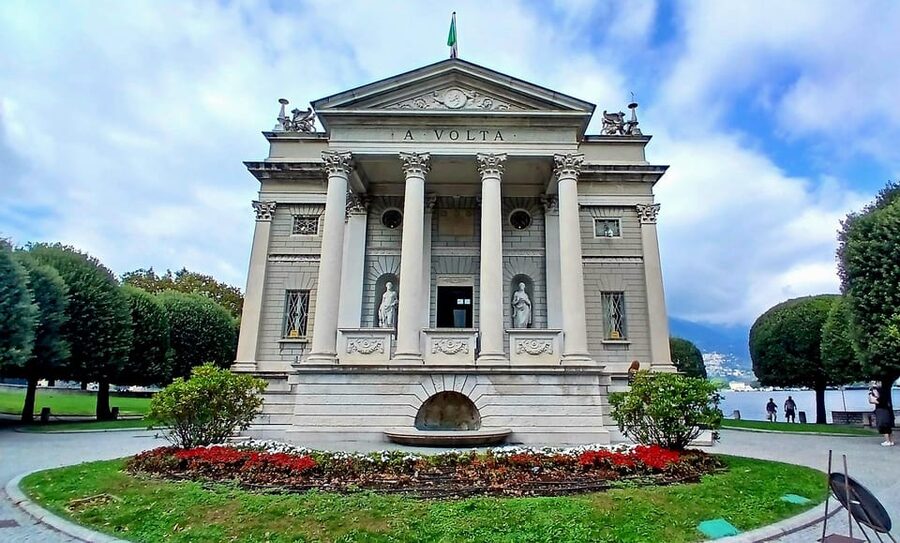
This is ideal for you if you want an efficient, guided way to connect Como’s main landmarks in a short time. You’ll likely enjoy it if you like architecture and churches, but you also want the route to include the lake and the everyday squares.
It also works well as a first day activity. The route gives you city structure: where the old-city gate sits, how the center squares line up, where the duomo fits, and how the lake view anchors everything.
You might choose another style of tour if you want museum time inside every stop. Since Tempio Voltiano and the World War I monument are not entered, the experience is more about orientation and key exterior impressions than extended indoor viewing.
Value for your time, why the entries make it worth it
A common risk with city-center walking tours is that they become lots of looking, not much seeing. Here, the value comes from the entries that actually help you learn.
You enter Porta Torre, you enter the Church of San Fedele, and you enter the Duomo di Como. Those are the moments where a guide can explain details you would otherwise miss, like how the space is shaped for worship and how symbols show up on façades and portals.
Add in the Spanish guide, and the fact that the route includes Lake Como viewpoints from Piazza Cavour, and you get a balanced mix of culture, city feel, and scenic reward. It is not a long sit-in-the-museum day, but it is not a rushed outside-only walk either.
Should you book this Como historic center tour?
Book it if you want a clear, guided path through Como’s most meaningful center sights in about a couple of hours, with real interior access at the duomo and major churches. It’s a strong pick when you care about architecture details, the Romanesque church features like the dragon portal, and you want to end with lake views and a reflective monument.
If you expect every stop to include long museum time, look elsewhere, because Tempio Voltiano is explained but not entered, and the World War I monument is also not entered. Otherwise, this is a well-paced way to make Como feel understandable, not just pretty.
FAQ
What is the duration of the tour?
The activity is listed as 2 hours. The described itinerary lasts about 1 hour and 30 minutes.
Where do we meet for the tour?
You meet in front of the Liceo Volta, located next to Torre Porta.
What language is the guide?
The live tour guide speaks Spanish.
Is the tour wheelchair accessible?
Yes, the tour is wheelchair accessible.
Which places does the tour include entering?
You enter Porta Torre, the Church of San Fedele, and the Duomo di Como.
Do we enter Tempio Voltiano and the World War I monument?
No. Tempio Voltiano and Monumenti ai Caduti are not entered.
Where does the tour end?
The tour finishes at Tempio Voltiano.
Does the tour include Lake Como views?
Yes, there is a Lake Como photo stop, and the route includes Piazza Cavour which overlooks the lake.
What is the cancellation policy?
Free cancellation is available up to 24 hours in advance for a full refund.
Recently reviewed around Como
- Lake Como: Self-Guided Walking Tour – Downtown Como★ 2.4 · 8 reviews
- Como: Private Photoshoot with Post-Editing★ 4.9 · 8 reviews
- Lake Como: Villa Carlotta and Villa Melzi with Ferries★ 3.8 · 4 reviews
- Lake Como: Shared or Private 3 Hours Boat Tour with Aperitif★ 4.4 · 5 reviews
- Lake Como: Shared or Private 2 Hours Boat Tour with Aperitif★ 4.1 · 9 reviews
- Como: Lake Como Private Guided Boat Tour★ 5.0 · 36 reviews
- Lake Como: Self-Drive Boat Rental★ 4.2 · 25 reviews
- Lake Como Rent: 1-Hour Boat Rent Without License★ 4.4 · 14 reviews
Historical Tours, compared.
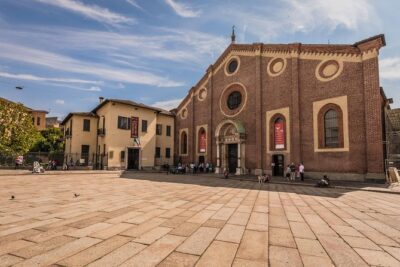
Historic Milan Tour with Skip-the-Line Last Supper Ticket
Read our review →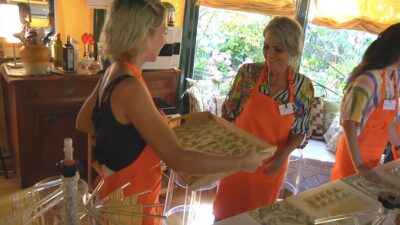
Fresh Pasta and Tiramisù Class in A Historical Home
Read our review →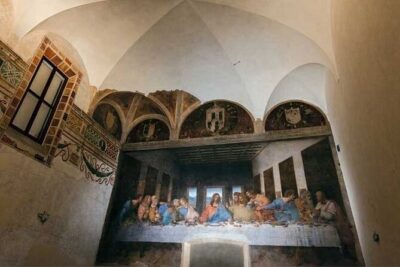
Step Into History: Leonardo Vinci’s Last Supper Tour
Read our review →
Natural History Museum Entry Ticket & Audio Guide
Read our review →
Nature and Heritage of Cinque Terre Family Private Walking Tour
Read our review →
Browse the lists this tour appears in