
Reviewed · SFORZA CASTLE TOURS
Milan: Sforza Castle and Michelangelo’s Pietà Rondanini Tour
Milan gets labeled as modern for a reason, but this tour is interesting because it drags you straight into the city’s old power center, Castello Sforzesco, with stories that explain why Milan mattered. You start in the public square, then step into courtyards and museum spaces where Visconti and Sforza ambition still feels close. I especially like how guides such as Giorgio and Simone connect the art to the people in charge.
Two things I really love. First, you get a focused, meaningful look at Michelangelo’s Pietà Rondanini, Michelangelo’s last unfinished marble, worked right up until days before his death at 89. Second, you get a clear, story-driven walk through the ducal courtyards, where Leonardo da Vinci lived and worked at court for nearly twenty years. A solid hour or so of “why it matters,” not just “what you’re looking at.”
One drawback to consider: at 1.5 hours, the tour is designed for highlights, not for lingering for ages in every museum room. If you want long, slow browsing time, you’ll need to plan extra solo time after the tour.
Key highlights to expect
- Direct focus on Michelangelo’s Pietà Rondanini, including how its unfinished style ties to emotion at the end of his life
- Fast, organized castle entry, with entrance fees and museum access included
- Ducal Courtyards of the Sforza and Visconti era, where court politics becomes easy to visualize
- Leonardo da Vinci’s presence in the castle, not only as a painter, but as a court engineer and architect
- Castle symbols and power details, including the meaning of the Biscione serpent coat of arms
Why Castello Sforzesco Works So Well for a Short Tour
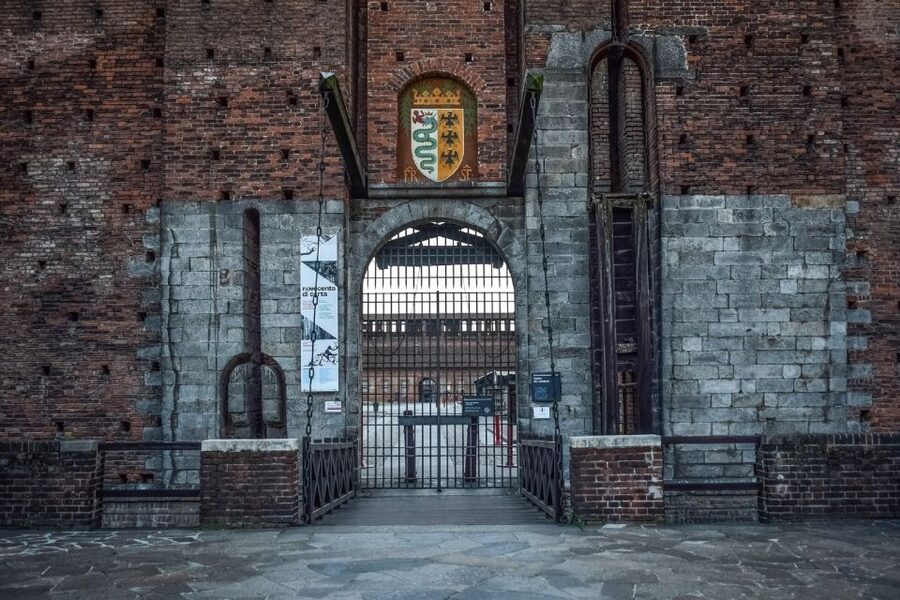
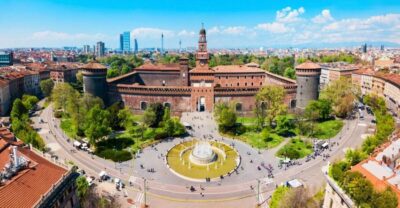
Castello Sforzesco is not a small “nice building” stop. It is one of Europe’s big defensive structures, and that physical mass helps you understand medieval and Renaissance Milan at a glance. From the outside, it looks built to dominate. Inside, the story flips from defense to display, where dukes used art, architecture, and spectacle to show control.
What makes this tour good value is the pairing. You do not just see the castle. You also see one of the most emotionally charged works connected to Michelangelo’s final years. That contrast keeps your brain awake and your feet moving in the right direction for 1.5 hours.
More of Sforza Castle:
- Milan: Sforza Castle Entry Ticket with Digital Audio Guide
★ 4.0 · 2,675 reviews - Milan: The Last Supper & Sforza Castle Guided Tour
★ 4.6 · 610 reviews - Milan: Last Supper and Sforza Castle Guided Tour
★ 4.6 · 498 reviews
Meeting at Piazza Castello and Getting Started Without Stress
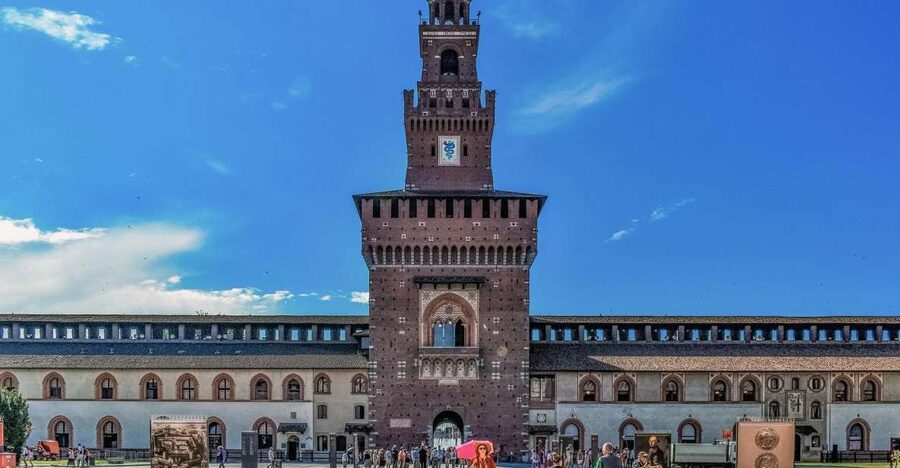
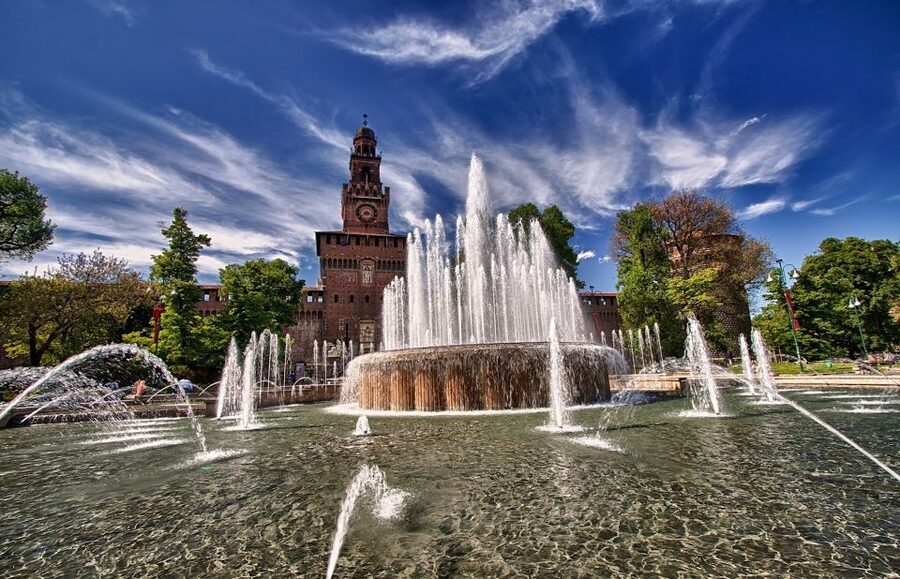
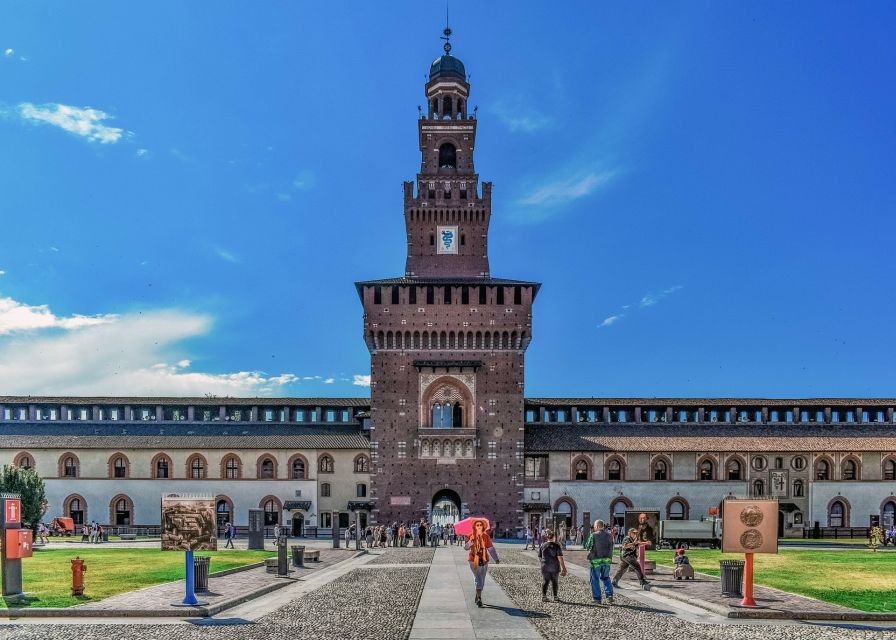
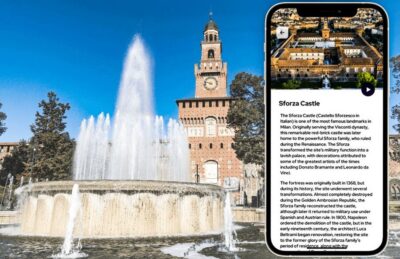
You meet in Piazza Castello, under the Filarete clock tower, right in front of Sforza Castle. The key detail is that you do not meet inside the courtyards. Look for your guide with the Hidden Experiences purple flag or board.
This matters because that area can feel like a maze if you show up late or confused. Arriving a few minutes early helps you spot the sign fast and get your headphones sorted immediately, instead of spending your best daylight time wandering outside.
Seamless Castle Entry, Museum Access, and What It Includes
The tour includes entrance fees to the castle and the museum, plus a certified tour guide. If your group is larger (headphones are provided from 11 participants), you’ll get a set so you do not have to shout over the crowd.
Also, plan your expectations around the structure of the visit. This is a guided route through the spaces that connect the sculpture to the people and politics of Milan. You get enough time to see the core highlights, but you are not signing up for a full museum marathon.
Michelangelo’s Pietà Rondanini: Unfinished Marble With Final-Year Power
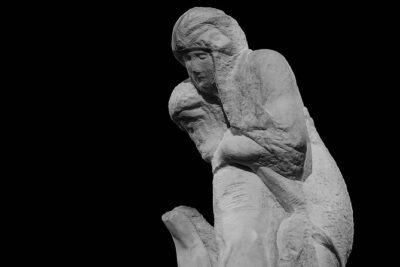
The Pietà Rondanini is housed in a museum space inside the castle, and that setup is perfect for this work. Michelangelo’s final, unfinished testament forces you to look slower. The figures are elongated and the surfaces carry that raw non-finito feel. It does not try to flatter the eye with perfect finish.
The guide’s job here is to help you understand why that unfinished quality is the point. Michelangelo worked on this marble block until just a few days before his death at 89. So the sculpture reads like urgency. The emotion is not polished into calm. It is left exposed, which makes the scene feel closer to real human grief than staged perfection.
If you care about art history, you’ll appreciate how the guide explains the shift from Michelangelo’s earlier, more anatomical emphasis to something more spiritual and immediate here. If you just like good art, the sculpture still grabs you, because it looks like a mind working at the edge of its own lifespan.
A different kind of day out of Milan:
- Milan: Cathedral and Duomo’s Terraces Entrance Ticket
★ 4.6 · 61,054 reviews - Milan: City Sightseeing Hop-On Hop-Off Bus with Audio Guide
★ 4.0 · 6,256 reviews - Milan: Milan Cathedral Direct Entrance – Terrace Excluded
★ 4.5 · 5,782 reviews - Milan: Guided Walking Tour & Last Supper Visit with Ticket
★ 4.7 · 5,409 reviews
Ducal Courtyards of the Visconti and Sforza: Where Power Becomes Architecture
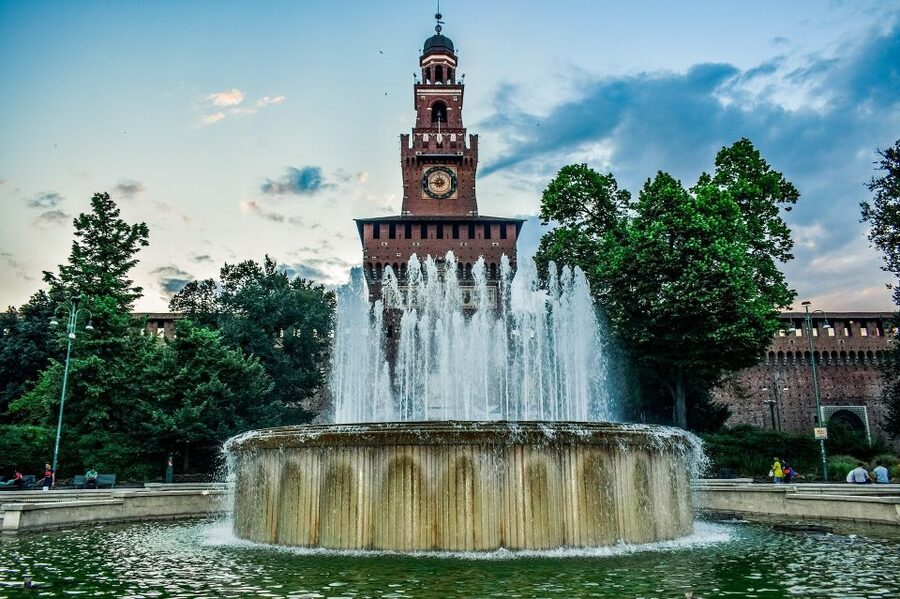
After the sculpture, the tour changes gears into the castle’s internal courtyards and Renaissance architecture. This is where the castle stops being a backdrop and becomes a working stage.
You’ll move through spaces connected to ducal life and ceremonial presence, including areas described as the Ducal Courtyards and key Renaissance courtyards such as the Corte Ducale and the Cortile della Rocchetta. The guide uses these spaces to explain how Milanese rulers turned stone into messaging. Think: who had access, who could claim prestige, and how daily movement through the castle reinforced hierarchy.
The court story matters because it keeps the architecture understandable. Instead of reading walls like a textbook, you start picturing the people inside the schedule of a duke’s world. That is what makes a short guided route feel satisfying.
Leonardo da Vinci at Sforza Castle: More Than The Last Supper
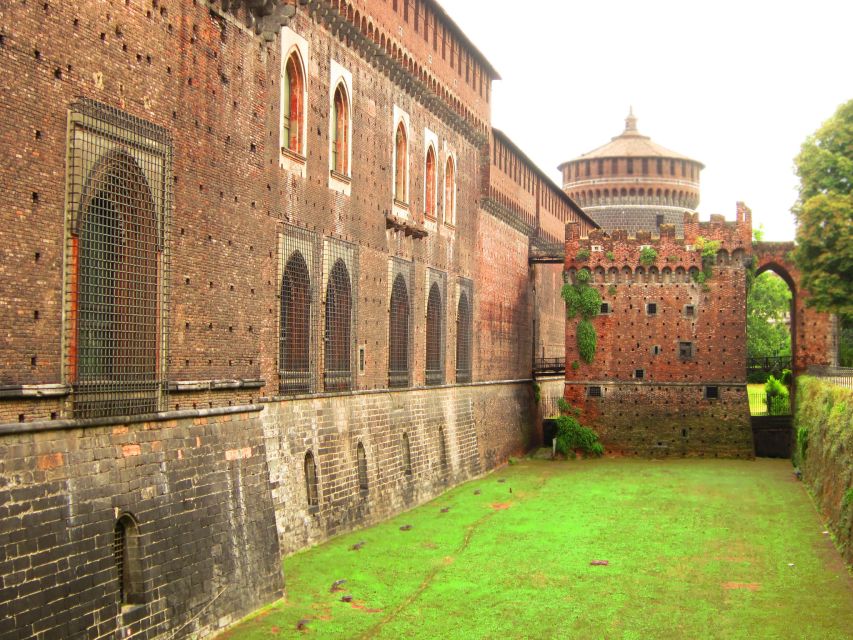
Leonardo is famous for paintings, but this tour gives you a more complete picture by placing him inside Sforza Castle’s world. The guide walks you through the angle that Leonardo lived and worked here for nearly twenty years. While he is often associated with The Last Supper, this castle role highlights something more practical: Leonardo served as a court engineer and architect.
That is a key value point for you. You do not just collect facts. You connect the dots between art and engineering. In a place that physically mixes power and design, it makes sense that Leonardo was valued for skills beyond painting.
You’ll also hear about Leonardo’s complex relationship with the Sforza family, which helps explain why the castle mattered to his career. It turns “Leonardo lived in Milan” into something with real stakes.
Ludovico il Moro, the Biscione, and Daily Politics You Can Actually Picture
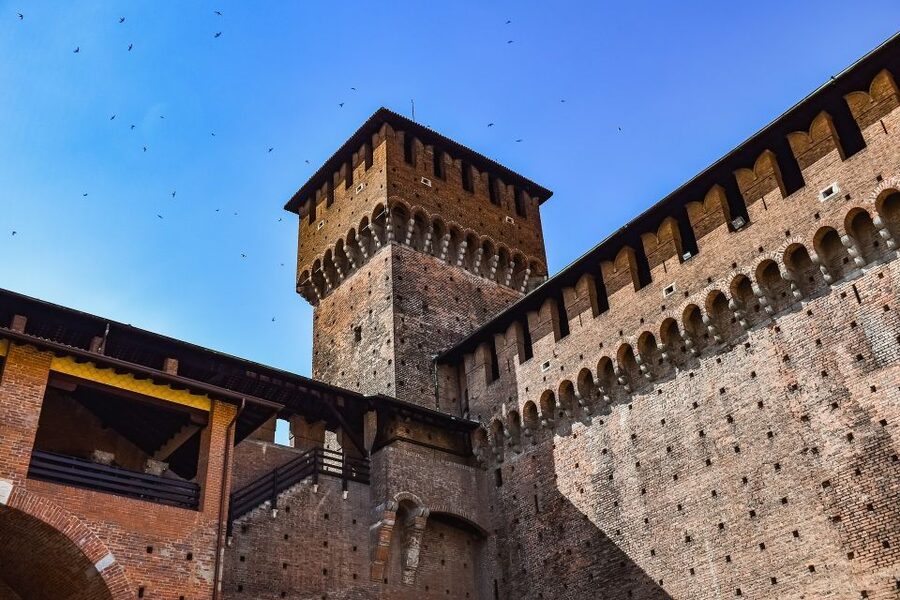
Once you’re oriented in the castle, the guide shifts to court intrigue, including the role of Ludovico il Moro. The stories here focus on how Milan worked when dukes were shaping policy, alliances, and culture by controlling the narrative.
A standout detail is the meaning of the Biscione, the iconic serpent coat of arms. The guide uses symbols like this to make power feel less abstract. When you know what a badge represents, you start noticing it everywhere.
You also hear about noblewomen and ambitious men, which helps balance the usual “great ruler” viewpoint. Even in a short 1.5-hour tour, those human angles keep the whole experience from becoming a lecture.
Filarete Tower and Castle Survivorship: How the Fortress Stayed Relevant
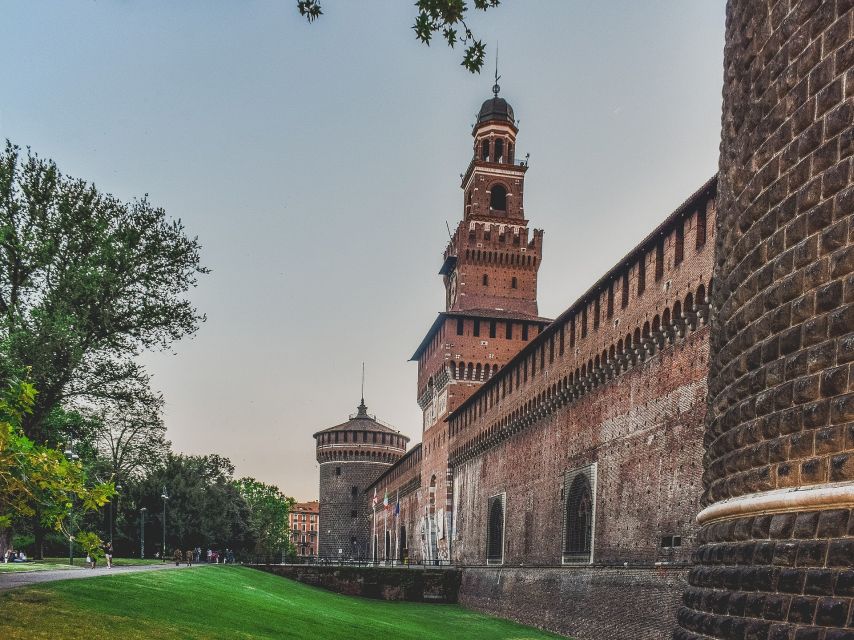
As you walk under the shadow of the Filarete Tower, the tour builds toward a big theme: how this fortress survived centuries and became a symbol of Milanese identity.
That survivorship part is important because castles often get treated like museum pieces. Here, the guide ties the castle’s survival to the city’s ability to keep reinventing itself. Military power fades, but political and cultural importance can reappear in new forms.
For you, this makes the castle feel less like a stop on a checklist and more like a living thread running through Milan’s Renaissance transformation.
Price and Value: What $47 Buys You in Real Terms
At $47 per person for about 1.5 hours, you’re paying for three things that are hard to replicate on your own without planning:
- Entrance fees to the castle and museum spaces
- A certified guide who handles context and explanation
- Headphones if the group size triggers them, which improves clarity in crowded rooms
The value comes from efficiency. The route is short, but the guide tries to connect sculpture, architecture, and political story into one clean arc. If you go solo, you can certainly see the Pietà and explore the castle. The difference is you might miss the “why” behind what you’re seeing, especially with Michelangelo’s final unfinished approach.
So if your goal is maximum meaning per hour, this price is reasonable.
Small Group Energy and How Guides Shape Your Experience
This is a small group guided tour, and in places like Sforza Castle, that detail really matters. You get better listening, easier movement through rooms, and more time for questions compared to a huge group with a tight pace.
The reviews also point to one pattern: the best experiences usually happen when the guide can explain with both structure and personality. Guides named in feedback include Giorgio, Stephanie, Fabio, Lore, Stefania, and Simone, and their recurring strengths are clear storytelling and strong clarity on art and context. You should expect a guide who makes the castle readable fast.
One practical consideration: because this is a guided route with limited time, you may feel a bit rushed in museum areas beyond the main stops. The route is designed around highlights, so it helps if your expectations match that plan.
What to Know Before You Go (So the 1.5 Hours Feel Good)
Here’s how I’d plan it for your day in Milan.
- Wear shoes you trust, because courtyards and museum floors add up quickly.
- If you’re sensitive to heat, the timing of your day matters. Courtyard time can feel exposed.
- Bring water, since food and drink are not included.
- Hotel pickup and drop-off are not included (it’s optional with an extra charge), so make sure you’ve got a simple way to reach Piazza Castello.
Also, the tour is wheelchair accessible, which is a big plus if mobility is a concern. Private group options are available if you want more control over pacing.
Who This Tour Is Best For
I’d point you to this tour if you fit one of these groups:
- You want Michelangelo’s Pietà Rondanini and you want help understanding why it is special beyond its fame
- You care about how Renaissance power worked, especially in Milan under the Visconti and Sforza
- You want a Leonardo connection that goes beyond the single famous painting
- You like guided context and prefer a focused route over wandering for hours without direction
If you’re the kind of visitor who loves to spend a whole day drifting through museums, this tour still can work, but plan to follow it with extra unstructured time. Think of it as a sharp foundation, not the entire museum education.
Should You Book the Sforza Castle and Pietà Rondanini Tour?
Yes, if your priority is meaningful highlights in 1.5 hours. The Pietà Rondanini part is worth it even for art-curious first-timers, because Michelangelo’s unfinished look is easier to appreciate with real context. The castle portion also pays off because the guide ties architecture and symbols to the Visconti and Sforza families, plus Leonardo’s role inside the court.
I would skip it only if you need long museum time with no structure, or if you already know the major context and you plan to study the castle at your own speed for hours. For everyone else, this is a strong, efficient way to experience Milan’s Renaissance core.
FAQ
How long is the Milan Sforza Castle and Michelangelo’s Pietà Rondanini tour?
The tour lasts 1.5 hours.
What is the price per person?
The price is $47 per person.
Where do I meet the guide?
Meet the guide in Piazza Castello, under the Filarete clock tower, in front of Sforza Castle. Look for the Hidden Experiences purple flag or board.
Is food and drink included?
No. Food and drink are not included.
Are the entrance fees included?
Yes. Entrance fees to the castle and museum are included.
What languages are offered for the live guide?
The tour is offered in Italian, English, German, French, and Spanish.
Is the tour wheelchair accessible?
Yes, it is wheelchair accessible.
Is hotel pickup and drop-off included?
No. Hotel pick up and drop-off are not included, though it may be available for an extra charge.
Recently reviewed around Milan
- THE WORLD OF BANKSY. THE IMMERSIVE EXPERIENCE – MILANO VARESINA 204★ 4.5 · 42 reviews
- Milan: The Story of Leonardo da Vinci Private Guided Tour★ 5.0 · 5 reviews
- The Monumental Cemetery of Milan: Discover the Unexpected★ 5.0 · 5 reviews
- Milan: Piazza Gae Aulenti and Pelli Tower Walking Tour★ 4.7 · 3 reviews
- Milan: Private or Shared Essential Walking Tour★ 4.7 · 84 reviews
- Milan: Bike Tour with Picnic on the turtle lake★ 4.9 · 40 reviews
- Milan | In the Crypt of time, holographic tour★ 4.6 · 77 reviews
- Milan: Test Drive a Ferrari 458 on a Race Track with Video★ 4.4 · 52 reviews
Sforza Castle Tours, compared.
Sforza Castle Entry Ticket with Digital Audio Guide
Read our review →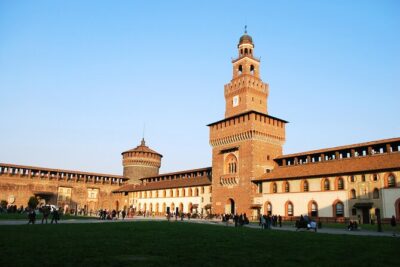
Sforza Castle and Michelangelo’s Pietà Rondanini guided experience
Read our review →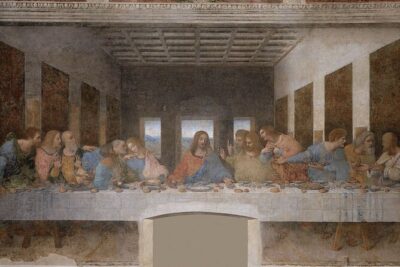
The Last Supper and Sforza Castle Tour – group tour
Read our review →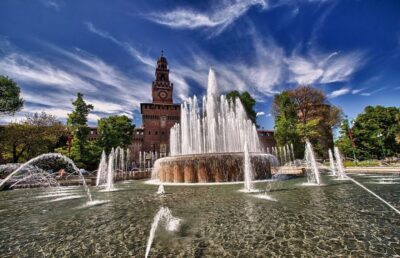
Browse the lists this tour appears in