
Reviewed · MILAN
Intensive Italian Language Course in Milan
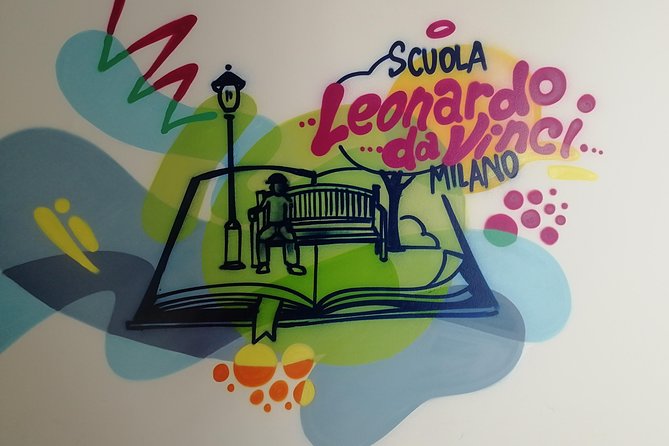
Learning Italian in Milan is interesting because you are not stuck in a classroom bubble. This intensive course at Scuola Leonardo da Vinci Milano is built to push you into real Italian habits fast, with a small mixed group and teaching that starts immediately on day one.
I really like the four lessons per day, Monday to Friday structure, because it turns learning into a clear daily routine instead of random practice. I also like the small classes (max 14), which makes it easier to get your questions answered and to actually speak.
One thing to consider: the course is held only in Italian, so if you want lots of English explanations or you are extremely anxious about speaking early, this may feel intense. Also, how classes run can depend on current pandemic-related restrictions, so your exact experience could shift.
Key highlights to know before you book
- Italian-only from day one, so you start speaking sooner instead of waiting for confidence.
- Up to 14 students, which keeps the class interactive even when you are learning.
- 4 lessons per day, Monday to Friday, a true intensive pace for fast progress.
- Textbooks included, so you avoid extra costs and can focus on learning.
- Practical Milan support, from navigating the city to topics like SIM cards and administrative issues.
- Extra cultural practice, including activities during the week and on weekends, with help from staff like Luisa and instruction by teachers including Ana.
Milan is the right classroom for Italian (even if you have limited time)
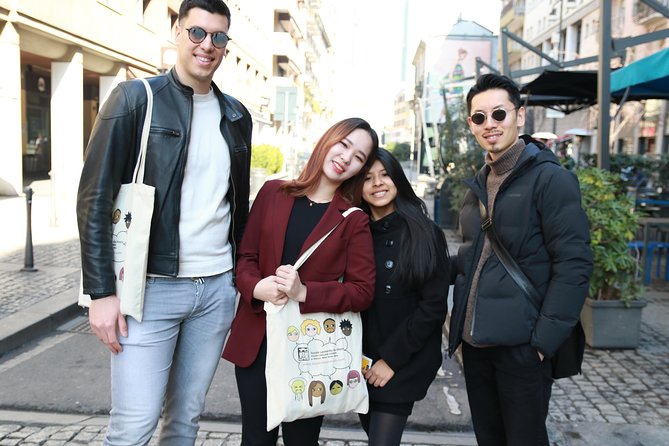
Milan can feel like a whirlwind city, but that actually works in your favor for an intensive language course. You get constant chances to hear Italian in shops, on the street, and around transport. And because the school is central, you do not waste your energy commuting across town.
From a learning standpoint, the big win is pressure in a good way. You are in Milan, surrounded by Italian, and the course is designed to make Italian the default. One student described the setting as warm from day one, with staff who know your name and set a friendly tone. That matters, because a language class goes better when you are not afraid to make mistakes in front of people.
If you are planning a short visit, Milan also helps you feel productive. You are not only sightseeing. You are building a skill you can use the moment you step out the door.
Other Milan trips worth an open tab:
- Milan: Cathedral and Duomo’s Terraces Entrance Ticket
★ 4.6 · 61,054 reviews - Milan: City Sightseeing Hop-On Hop-Off Bus with Audio Guide
★ 4.0 · 6,256 reviews - Milan: Milan Cathedral Direct Entrance – Terrace Excluded
★ 4.5 · 5,782 reviews
Course rhythm: 4 lessons a day, Monday to Friday, max 14
The intensive course runs Monday to Friday with 4 lessons per day. That schedule is the core of the value here: you get enough classroom time to move beyond basics without waiting months.
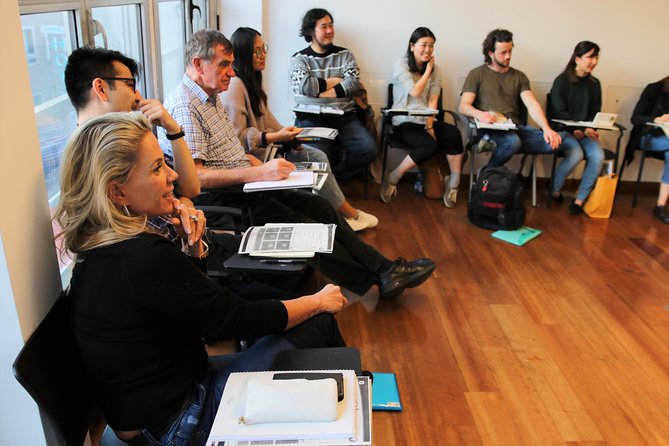
The class size is capped at 14 students, and the group mixes nationalities and ages. That variety is not just social. It changes the classroom energy. You will hear different accents and different learning questions, and you will also get used to real-world Italian speed because everyone comes from a different background.
The school uses textbooks provided by the school, included in your course price. Teachers also use extra materials to practice different modern communication skills, not only grammar drills. And because the course is held only in Italian, you are constantly training your brain to respond in the language.
One practical bonus: the meeting point is easy to find and you are close to public transportation. That reduces the daily stress that can steal focus when you are studying hard.
What Italian-only instruction feels like in real life
The promise here is simple: from the first day, you speak only Italian in class. That is a strong choice, and it can be uncomfortable at first. But it is also how most people actually start improving quickly.
Here is what that means for you day to day:
- You will likely spend the first hours learning phrases, patterns, and key verbs fast.
- You will be encouraged to use the language right away, instead of pausing for translation.
- Your listening skills improve faster because you are constantly hearing Italian without English switching.
If you have ever taken a class where English is used to explain everything, you might feel the difference immediately. Italian-only can feel stricter, but it also keeps your attention where it belongs: on the target language.
Also, class delivery may change depending on pandemic-related restrictions. The important point for you is to expect some variability in logistics, not a permanent disruption in the teaching approach.
Levels from A1 up through B1, and how teachers help you stay on track
This school offers multiple levels like A1, A2, B1, and more. That is a big deal for value, because you do not want to pay for an intensive course that is either too easy or too hard.
In the best-case scenario, your level placement helps you do three things:
- You stop wasting time on content you already know.
- You avoid falling behind when the course gets fast.
- You get enough repetition to build automatic responses.
One review specifically praised many instructors with PhDs in linguistics, and that lines up with what you want from an intensive program. You benefit from teachers who understand how people learn languages, not only how to teach lessons.
Another reason the teaching approach seems to work: teachers are described as engaging and kind, and they take time to make classes fun and comprehensive. Even in a short course, you can ask questions and get personal attention. That personal feel is hard to get in larger language schools.
If you want a concrete signal for how teaching works, one student credited a teacher named Ana for a great experience. Another guide named Luisa shows up in the school’s support and activity side, helping connect language practice with real Milan.
A different kind of day out of Milan:
- Milan: Guided Walking Tour & Last Supper Visit with Ticket
★ 4.7 · 5,409 reviews - Milan: Navigli Canal Boat Cruise
★ 3.3 · 4,502 reviews - Milan: Serravalle Designer Outlet Roundtrip Bus Transfer
★ 4.4 · 4,374 reviews - Milan’s Must See: Half-Day Tour of Last Supper, Duomo & La Scala
★ 4.0 · 4,193 reviews
Classroom location and your daily start point in Milan
Your day begins at:
Scuola Leonardo da Vinci Milano, Corso di Porta Vigentina 35, 20122 Milano (MI), Italy
The course ends back at the meeting point, so you are not dealing with end-of-day uncertainty. It is also described as centrally located in the Porta Romana area, which is helpful because you can choose where to eat and how to relax without crossing the city every day.
From a practical traveler perspective, being central changes the entire feel of an intensive course. You are more likely to:
- grab a quick lunch nearby,
- walk to practice Italian in daily errands,
- and keep your evenings free for rest or cultural activities.
The weekday structure: learning plus speaking time
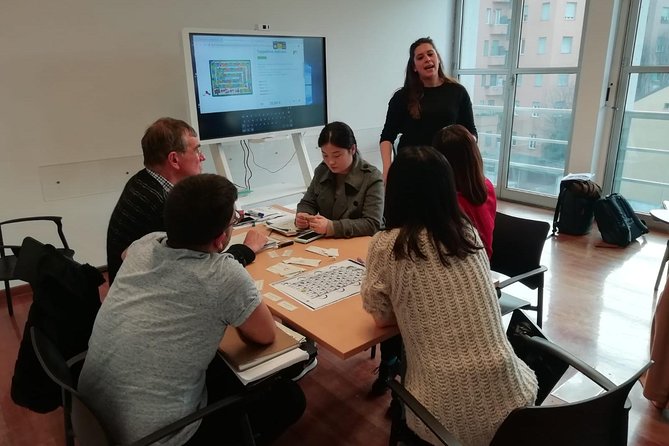
The course is built around 4 lessons per day. What you can reasonably expect is a steady rhythm of input and practice, with teachers guiding you through speaking and listening while using the course materials.
Because the school uses additional support materials beyond the textbooks, you should expect different formats for communication practice. That might mean short speaking tasks, listening exercises, and structured speaking activities where you are forced to respond instead of only repeating.
A key detail: the class includes students from different nationalities and age groups. In practice, that usually means there is more variety in class conversations and more chances for you to practice real dialogue, not only scripted lines.
After those lessons, your day is not only about going back to your hotel and calling it a win. The school also offers cultural activities during the week, and those are where a lot of language gains get “sticky.”
After class: cultural activities that turn your Italian into something you can use
This is one of the most praised parts of the experience. The school offers cultural activities during the week and on weekends, designed as opportunities to practice listening and speaking while learning about Italian history and culture.
In real life, this matters because your brain needs a reason to use the language right after class. If you go home and only read notes, you might memorize. But when you use Italian in a city setting, you start thinking in the language.
Some students described activities like wine tastings and city or museum tours. Another student emphasized that after-class activities helped them get to know Milan in a way that felt truly local.
You can also see how the school blends guidance and language. One review mentioned Luisa as a guide, and the tone of the feedback suggests these outings are not random add-ons. They function like practical speaking labs.
There is also mention of an art program arranged by the school, taught by Silvia, with a modern approach to teaching techniques and mixing media. If you are the type who learns best through hands-on experiences, this kind of side program can make your trip feel more personal, not only academic.
Important note: the exact mix of activities can depend on what the school is offering during your dates, but the presence of cultural programming is clearly part of the model.
Value check: what you are paying for in 5 days
The listed price is $365.63 per person for about 5 days. On paper, that is not a bargain price in the way budget tours are, but intensive language courses are not really comparable to sightseeing packages. You are paying for daily instruction, small-group teaching, included materials, and staff support.
Here is how to judge value in a realistic way:
- You are getting 4 lessons per day across Monday to Friday, so you are buying a concentrated amount of teacher time and structured practice.
- The textbooks are included, which reduces hidden costs.
- The Italian-only method increases the learning payoff because you practice the language in the classroom, not only outside it.
- You also get support from the school for practical matters, which can save you time and stress.
If you compare this to the cost of buying learning materials and doing self-study for the same time period, the daily coaching and small group attention are usually where the value lands. Even better, longer stays come with savings: you can book from 1 to 48 weeks, and from the 5-week course the pricing becomes more affordable. If you are able to stay longer, this course can be a serious long-term plan, not only a quick fix.
If you are only in Milan for a week and you want real improvement you can feel, this intensive setup is a strong use of your travel time.
Practical support in Milan: help that goes beyond textbooks
A language course is only as good as the support around it. This school is praised for practical help with navigating Milan.
One review highlighted that the staff helped with things like:
- obtaining a SIM card,
- navigating the city,
- and even more serious administrative topics like residency permits and credentialing exams.
You should not assume every student needs those exact services, but it tells you the school staff understands that learning a language is tied to daily life. It is easier to show up to class and stay consistent when you feel confident about your logistics.
Also, confirmation is received at booking time, and the school is near public transportation. These small items sound boring until you are actually traveling. Then they become the difference between a smooth learning week and a stressful one.
Small group, big conversation, and making friends the useful way
One of the underrated benefits of courses with a cap like 14 is that you get social momentum without losing focus. People talk during breaks. You hear each other struggle. You also help each other when someone is stuck on a phrase.
Multiple reviews mention meeting new friends through class and school activities. The important part for you is how that friendship translates to language practice. A class group can turn into an easy reason to speak Italian outside the classroom, because you have classmates who want to keep practicing too.
If you are traveling solo, this can make the course feel less like school and more like a structured community.
Who should book this course, and who might want a different pace
This course fits best if you want:
- fast improvement through daily practice,
- a structured routine (4 lessons per day is not casual),
- and a method that does not rely on English explanations.
It is also a good fit if you are comfortable with international classmates. The school mixes ages and nationalities, so you should expect variety in the room.
You might rethink if:
- you want English in class, because it is Italian-only,
- you are worried about speaking on day one,
- or you need total flexibility because course delivery can be affected by pandemic-related restrictions.
Also, this experience is non-refundable and cannot be changed for any reason. If your plans are uncertain, think carefully before committing.
Final take: should you book this Italian course in Milan?
If your goal is to make real progress in a short time, this is the kind of course that can actually move the needle. The combination of small classes, intensive daily lessons, and Italian-only teaching is exactly what you need if you want to start using Italian quickly instead of waiting for later.
Add to that practical support in Milan and weeklong cultural activities, and you get a learning trip that feels grounded in real life. For many people, the best part is not only what happens in class, but the way the school helps you use Italian around the city.
I would book it if you want structure, daily speaking practice, and the confidence that staff are there to help with both learning and real-world logistics.
If you are more interested in slow travel and casual practice, you might choose a gentler class format. But for an intensive week, this one looks like a strong, focused buy.
FAQ
How long is the intensive Italian language course in Milan?
The course is listed as about 5 days per booking. The intensive format runs Monday to Friday with 4 lessons per day.
How many lessons are taught each day?
The intensive course includes 4 lessons per day, Monday to Friday.
Is the course taught in English or Italian?
The course is held only in Italian. It is offered in English, but classes themselves are not described as being taught in English.
What is the maximum class size?
The course has a maximum of 14 travelers, which keeps the group small.
Where does the course meet in Milan?
The meeting point is Scuola Leonardo da Vinci Milano, Corso di Porta Vigentina 35, 20122 Milan, Italy. The activity ends back at the meeting point.
What is the cancellation policy?
This experience is non-refundable and cannot be changed for any reason. If you cancel or request an amendment, the amount paid is not refunded.
Recently reviewed around Milan
- Milan Wine Tasting Experience★ 4.7 · 60 reviews
- From Milan: Villa del Balbianello and Varenna by Train★ 4.2 · 27 reviews
- Visit of Verona and Lake Garda. Full day tour from Milan★ 4.6 · 5 reviews
- Trekking in the Wood with picnic on the turtles lake★ 5.0 · 9 reviews
- taxi / transfer service to and from airports★ 5.0 · 51 reviews
- Explore History and Style with this Walking Tour in Milano★ 5.0 · 15 reviews
- Trekking in the Wood with picnic on the turtles lake★ 5.0 · 8 reviews
- Wine Tasting Experience in Milan City Center★ 4.5 · 32 reviews