
Reviewed · VENICE DAY TRIPS FROM MILAN
Private Tour from Milan: Venice Full Day Trip by Train
A Milan to Venice day trip by train is interesting because you get the romance without the stress of driving, and you land in Venice ready to walk. I like the private guide format, and I also like that the day is built around Venice’s walkable highlights, from the Grand Canal to the markets and canalside squares.
What I like most is how the route mixes the famous stops with the in-between Venice you usually miss. You also get mobile tickets and clear advance communication, so you spend less time figuring things out and more time looking around.
One consideration: Venice can feel crowded and the lagoon air can be noticeable near canals. If you’re very sensitive to smells or you hate tight photo moments, plan for that reality early in the day.
Key highlights to know before you go
- Early start rail day: depart Milan at 7:30 am and ride to Venice, then head back after your walking route
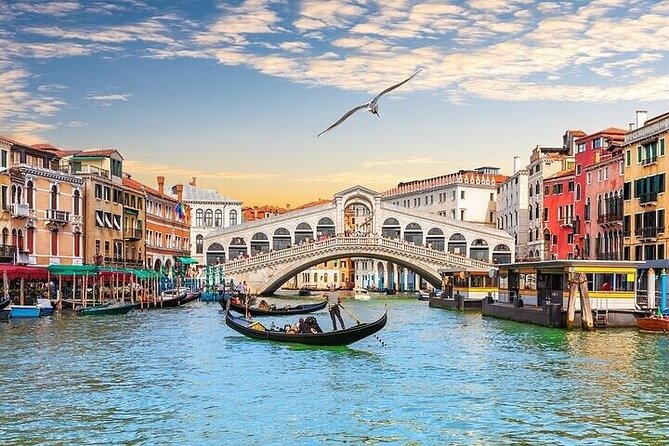
- Grand Canal classics: views and photo moments at Canal Grande, Rialto, and major bridges
- Church and square variety: from San Giorgio dei Greci to San Zaccaria and Campo spots in Dorsoduro
- Real Venice shipyard angle: Squero di San Trovaso, a traditional place for repairing gondolas
- Local detours: Strada Nova and Campo Santa Margherita, plus a Banksy mural at Campo San Pantalon
- Guide support that feels personal: guides like Sneh, Elshad, Mehmet, Dothan, and Dogan have been praised for pacing and steering away from tourist traps
Train to Venice, then a guided walk that keeps your day on track
This is a private full-day outing that runs on train time. You meet at Milano Centrale, Piazza Duca d’Aosta, 1 (7:30 am start), then the long part is the rail ride to Venice. The total day is about 11 hours, with train travel included, and you end back at the meeting point in Milan.
The private part matters. Your guide can set the pace, slow down for questions, and help you hit the spots that matter most to you, instead of funneling everyone through the same exact photo line. Several guides tied to this experience are described as patient and safety-minded, which is a big deal in Venice where you constantly cross bridges and squeeze through crowd bottlenecks.
You’ll also get communication before the day. The day before, you receive an email and WhatsApp message with the train ticket and tour info. The train ticket is purchased 48 hours in advance, so double-check the name on your booking and be ready for a fixed ticket.
More Venice day trips:
- From Milan: Day Trip to Venice with Guided City Tour
★ 4.4 · 614 reviews - Venice Day Trip from Milan with Guided City Tour
★ 4.0 · 383 reviews - From Milan: Venice Full-Day Guided Tour With Boat Ride
★ 4.5 · 322 reviews
Canal Grande and the St Lucy sanctuary view: your Venice “first look”
Your Venice day starts with the big one: the Canal Grande, the city’s main waterway. It runs about four kilometers and splits Venice into two halves, so it’s the quickest way to understand why Venice feels built on movement. Seeing it from the right angles also helps you grasp how bridges and streets connect like a giant indoor map.
As you start exploring, you’ll also have a chance to see the Sanctuary of St. Lucy. Even if you don’t go inside, it’s the kind of stop that gives the day texture, not just postcard angles. The tour allocates a longer block here, which makes sense because Canal Grande is where you want time to orient yourself.
A practical note: this is the part of Venice where you’ll be near water the most. That means the lagoon atmosphere can show up. It isn’t a reason to cancel, but if smells bother you, it can affect how pleasant the walking feels.
San Giorgio dei Greci and the leaning clocktower moment
Next up is Chiesa di San Giorgio dei Greci, including the famous campanile often called the leaning clocktower. The bell tower was designed by Simone Sorella and completed in 1592. What makes it memorable is that it appears to have tilted from the beginning.
This stop is also a story about community. The bell tower and the adjoining church were built for the Greek community in Venice, tied to sailors and merchants. You get more than a photo, you get a sense of Venice as a trading hub with multiple cultures living side by side.
The stop is short, but it works well because it interrupts the “bridge and square loop” with something more architectural and slightly unusual. If you like details, you’ll probably spend longer here than the allotted time.
Strada Nova: the wide street made for getting from Rialto to the station
After that, you move to Strada Nova, described as the widest street in Venice. It’s a very practical kind of Venice. The street was created in the 19th century to speed up pedestrian access between Rialto and the railway station. That meant demolishing buildings that would otherwise create a long, winding approach through narrower lanes.
This matters because it’s one of the few sections that feels designed for modern foot traffic. If you’ve ever walked into Venice and immediately felt “where do I go?”, Strada Nova gives you a legibility boost. It’s also a useful corridor while you connect between major landmarks.
And yes, you still see bridges. Venice doesn’t stop being Venice just because one street is wider.
More days out from Milan:
- Bernina Red Train, Swiss Alps & St Moritz From Milan
★ 5.0 · 2,954 reviews - From Milan: Lake Como & Bellagio DayTour with Private Cruise
★ 4.3 · 2,830 reviews - Swiss Alps Bernina Red Train and St.Moritz Tour from Milan
★ 4.5 · 2,369 reviews - Italy and Switzerland Day Trip: Lake Como, Bellagio & Lugano from Milan
★ 4.5 · 2,042 reviews
Rialto Bridge and St Mark’s Square: the big-stage duo
Then you’re at Ponte di Rialto, the oldest of the four bridges spanning the Grand Canal. It was a long-time economic hub, which helps you understand why Rialto isn’t only a pretty crossing. It was built for real commerce, which is why it still feels important even after centuries of change.
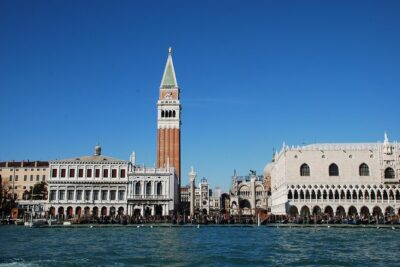
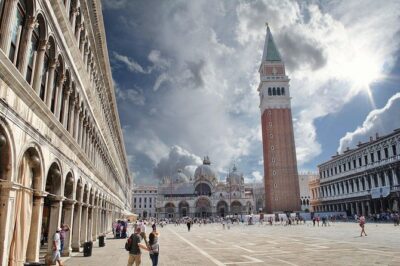
Right after that, you step into Piazza San Marco, Venice’s main public square. It’s the kind of space where you can stand still and still feel motion because of how many directions the city pours out from. The tour also connects the square with St Mark’s Basilica and its gold-ground mosaics depicting saints, prophets, and biblical scenes. Even if you only take in what’s visible from your path, the mention of the mosaics signals why this area is so central to Venice’s visual identity.
Timing in the day matters here. Since you start early from Milan, you’re in the square during a calmer part of the morning than you’d get if you arrived later. The exact crowd level changes day to day, but an early rail departure is a smart way to give yourself better chances for photos that don’t turn into a scramble.
Bridge of Sighs: Doge’s Palace to the prison story
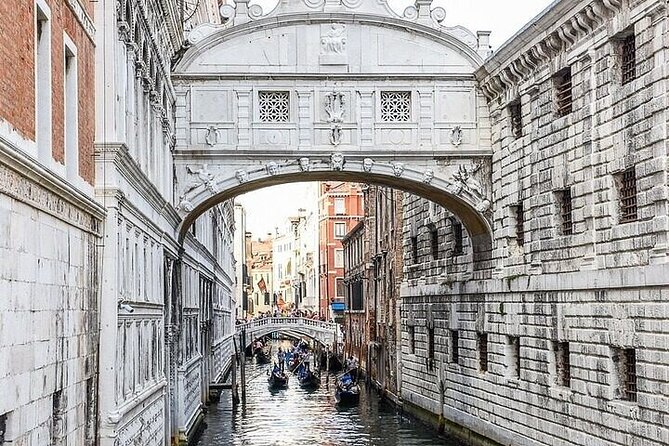
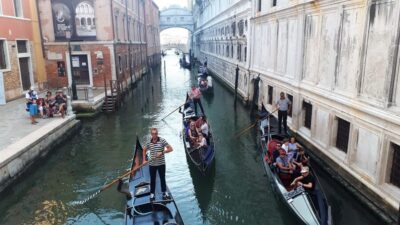
Next is Ponte dei Sospiri, the Bridge of Sighs. It connects the Doge’s Palace with the historic prison on the opposite side of the canal. The nickname comes from tradition: prisoners crossing it were said to sigh at the prospect of seeing the outside world for the last time.
What I like about including this stop is that it adds an edge to the day. Venice is often sold as pure beauty, but this bridge reminds you that power, punishment, and politics were part of the same city. The tour’s quick pacing means you get the concept without losing the rest of your day.
San Zaccaria and Ponte dell’Accademia: calmer corners near art country
You’ll then visit Chiesa di San Zaccaria, a 15th-century former monastic church. The present church was built between 1458 and 1515, and its facade blends late-Gothic and Renaissance styles. This is one of those stops that works best for travelers who like architecture and proportional details, because it gives you a break from the nonstop Grand Canal focus.
After that comes Ponte dell’Accademia. It crosses near the southern end of the Grand Canal and is one of only four bridges spanning the waterway. It’s named for the Accademia di Belle Arti di Venezia, so it links the crossing to the arts and creative education vibe near that end of the city.
If you’re a photographer, this is often a better bridge moment than the most famous one, because the day’s flow spreads you out across different canal angles. You still get the Grand Canal drama, just in a slightly different frame.
Squero di San Trovaso and the gondola-workshop angle
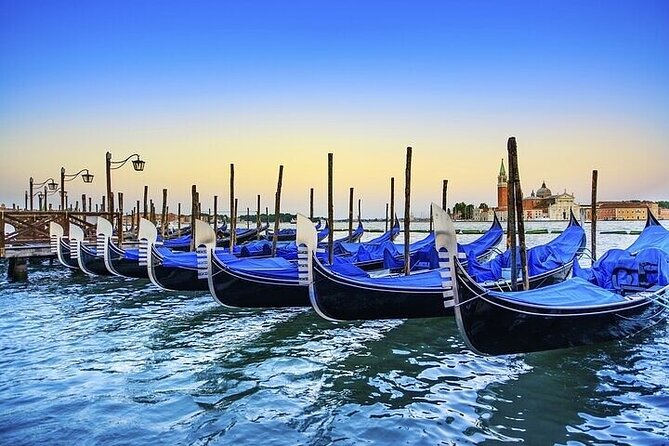
Then you hit Squero di San Trovaso, one of the oldest and best-known Venetian squeros. A squero is a classic shipyard where small boats are repaired, especially gondolas.
This is a great counterpoint to everything else. When you’re only seeing monuments, Venice can start to feel like a museum. Here you see Venice as craft. Getting a peek at how gondolas are made or repaired connects the romance to the real mechanics of the city.
The stop stays short, but it’s memorable because it feels grounded. It’s not just “look up at a view.” It’s “look at how Venice keeps functioning.”
Campo San Pantalon and Campo Santa Margherita: street art and everyday Venice
Next is a different kind of detour: Campo San Pantalon, where you can admire a Banksy mural commonly referred to as the shipwrecked or migrant child. This is the kind of stop that makes your Venice day feel current, not only historical.
After that, you’ll reach Campo Santa Margherita, located in the Dorsoduro area near university buildings. It’s a gathering place for students, especially at day’s end. This is one of those spaces where you can watch real life for a few minutes while your guide keeps you moving toward the next connection.
I like this pair of stops because they break up the heavy hitters. You still get Venice’s famous elements, but you also see that the city is lived in, not just visited.
Piazzale Roma, then the ride back to Milan
Your final stop is Piazzale Roma, at the entrance of Venice at the end of the Ponte della Libertà. It’s also the key reminder that Venice is mostly car-free. Piazzale Roma, plus nearby Tronchetto island, are the only places in Venice’s insular urban core accessible to ground motor vehicles like buses and cars.
This stop is useful because it gives you closure to the day. You’ve been walking through canal neighborhoods, bridges, squares, and working craft sites. Then you arrive where the city meets the outside world again, which makes the final train back to Milan feel smoother.
When the tour ends, you take the train back to Milan, about 2.5 hours.
What you get for the price: value and tradeoffs at $391.34 per person
At $391.34 per person, you’re paying for a specific mix: private guiding, 2nd class train transport, and the Venice visitor fee. Food and drink are not included, so you’ll want to budget for at least one proper meal on your own.
So is it worth it? For most people, the value comes from two places.
First, it saves energy. You don’t have to plan rail schedules, ticket timing, or route ordering between landmarks. Your guide also helps connect points efficiently, which matters in Venice where getting turned around can waste time fast.
Second, you get flexibility inside the walking plan. Guides connected with this experience are praised for adjusting to your wishlist, including helping add a stop for local shopping. One guide experience includes steering people away from tourist traps and pointing them toward reputable local businesses, including a glass artist shop. Another guide experience mentions carrying purchases for you and even helping you get settled on the train with your items.
Tradeoff: because it’s private, the price is per person. If you’re traveling solo, it can feel expensive. If you’re traveling as two or more, it often feels easier to justify because you’re paying for your group’s time and attention.
Who this tour is ideal for, and who might want a different option
This private train trip is ideal if you want a guided, structured Venice day without the full commitment of staying overnight. It’s also a good match if you like variety: big landmarks like Rialto and St Mark’s Square, plus the hands-on gondola workshop feeling of Squero di San Trovaso.
It’s also smart for first-timers. The route hits the essentials quickly, then adds local texture with neighborhoods like Dorsoduro and the Campo areas.
If you hate walking, you might feel the pace. The day is built around lots of short stops and constant movement across Venice bridges. Also, if you’re extremely sensitive to smells near canals, be ready for Venice air to be part of the experience.
Finally, English guidance is part of the offering. Still, language quality can vary by individual guide, so if English precision matters a lot to you, it’s worth confirming you’re comfortable with your guide at booking time.
Should you book this Milan to Venice private train trip?
I’d book it if you want a high-efficiency Venice day with a guide who can keep the day fun and organized, not just a checklist of landmarks. The train included is a big plus, and the route is well chosen for mixing famous spots with more local-feeling stops like Strada Nova and the shipyard at Squero di San Trovaso.
I would think twice if you want lots of free time to roam without any structure, or if the price feels hard to swallow as a solo traveler. Also, if smell and crowding stress you out, Venice will still do Venice things.
If you want a day that feels personal, not mass-market, this is a strong option.
FAQ
What time does the tour start, and where do I meet?
You meet at Milano Centrale, Piazza Duca d’Aosta, 1, 20124 Milano MI, Italy. The start time is 7:30 am.
Is this tour private?
Yes. It’s a private tour, so only your group participates.
How long is the day trip from Milan to Venice?
The duration is about 11 hours, and travel time is included.
How does the train ticket work?
The train ticket is purchased 48 hours in advance. You’ll also receive train ticket details by email and WhatsApp the day before the tour.
Is food included?
No. Food and drink are not included.
Are there admission fees at the stops?
The listed stops show Admission Ticket Free. A Venice visitor fee is included, but food is not.
Does the tour run in bad weather?
Yes. The tour operates in all weather conditions.
Can I get a refund if I cancel?
Free cancellation is available. You must cancel at least 24 hours in advance for a full refund, and cancellations within 24 hours are not refunded.
More Train Experiences in Milan
- Small-Group Lake Como & Lugano by Swiss Train + Boat Cruise
★ 5.0 · 1,084 reviews - Intimate Small-Group Bernina UNESCO Scenic Train on Swiss Alps
★ 5.0 · 619 reviews - Tour Bernina Red Train And St Moritz from Milan
★ 4.5 · 247 reviews - From Milan: Venice and Verona Full-Day Tour by Train
★ 4.1 · 217 reviews
Recently reviewed around Milan
- Milan Wine Tasting Experience★ 4.7 · 60 reviews
- From Milan: Villa del Balbianello and Varenna by Train★ 4.2 · 27 reviews
- Visit of Verona and Lake Garda. Full day tour from Milan★ 4.6 · 5 reviews
- Trekking in the Wood with picnic on the turtles lake★ 5.0 · 9 reviews
- taxi / transfer service to and from airports★ 5.0 · 51 reviews
- Explore History and Style with this Walking Tour in Milano★ 5.0 · 15 reviews
- Trekking in the Wood with picnic on the turtles lake★ 5.0 · 8 reviews
- Wine Tasting Experience in Milan City Center★ 4.5 · 32 reviews
Venice Day Trips from Milan, compared.
Venice Day Trip from Milan with Guided City Tour
Read our review →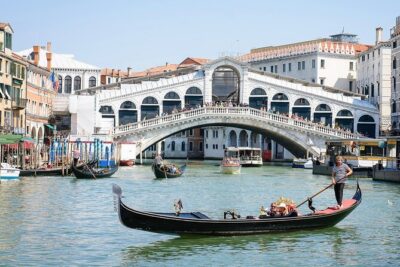
Venice and Verona Full Day Tour by Train from Milan
Read our review →
Browse the lists this tour appears in