Reviewed · GUIDED
Milan Skyscrapers Guided Tour: Porta Nuova, Unicredit tower & Vertical Forest
Milan’s newest skyline is the whole point here, and it is a fun way to understand how a big city can rebuild itself without throwing away its soul. This guided walk connects Milan’s Expo 2015 renewal with today’s most talked-about modern districts, from Porta Nuova to Isola.
I especially like two things: the focus on real urban design choices you can spot on the street, and the way the tour finishes with Eataly so you can switch from buildings to food without changing locations. If you get a great guide like Valerio, the whole story clicks fast.
One drawback to consider is the heat and walking pace. The tour is about 3 hours and is listed for moderate fitness, so bring water and plan for streets that can feel long in summer.
Key things to know before you go
- Expo 2015-driven renewal: you’ll connect what happened for the fair to what Milan looks like now
- Porta Nuova viewpoints: you get skyline context from elevated terraces, not just street-level photos
- Corso Como and Gae Aulenti Square: the route builds up to major landmarks in an efficient order
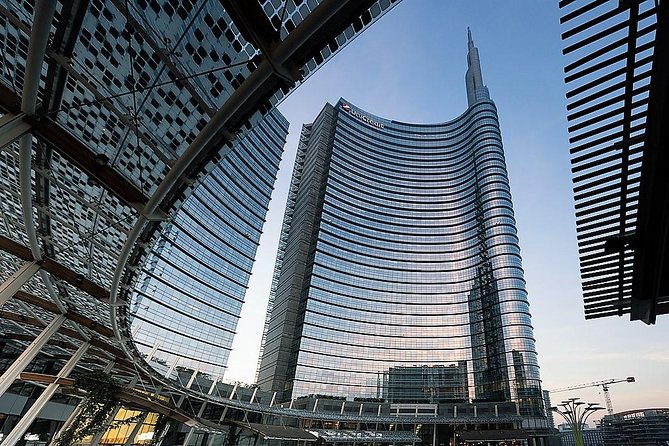
- Unicredit Tower focus: you see the skyline’s anchor and learn why it matters to Milan’s design direction
- Isola + Vertical Forest: you get the contrast between older “railing houses” and the reforestation concept on towers
Why Porta Nuova and the Vertical Forest feel different in Milan
This is not a stop-and-stare monument tour. It is a guided architecture walk through Milan’s modern reset, where planning decisions are visible right away. You’ll walk through neighborhoods that were reshaped as part of a major project tied to Expo 2015 and eco-sustainability goals, then end in one of the city’s easiest places to recharge with food.
I like that the design story stays grounded. Instead of vague slogans, you learn what the city changed, how architects and planners worked, and what that means for the skyline you see today. And because the tour moves between districts, you also get a practical sense of how Milan’s “old and new” can coexist in the same walk.
The Vertical Forest stop is the emotional closer for many people, because it is such a clear visual idea. Trees on a tower are not subtle, and that is exactly why it works as a learning moment: you can literally point at the concept and talk about the environment, biodiversity, and the goal of regenerating without expanding the city footprint.
A few more Milan days worth comparing
- Milan: City Sightseeing Hop-On Hop-Off Bus with Audio Guide
★ 4.0 · 6,256 reviews - Milan: Guided Walking Tour & Last Supper Visit with Ticket
★ 4.7 · 5,409 reviews - Milan: La Scala Theater & Museum Guided Experience
★ 4.1 · 2,931 reviews
Meeting at Eataly Milano Smeraldo and starting with the right energy
Your meeting point is Eataly Milano Smeraldo, Piazza XXV Aprile in central Milan, and the tour ends back at the same place. That matters more than it sounds. You can plan your day without a long transit shuffle at the end, and it sets you up for the food tasting finale without rushing.
Eataly also helps with one practical thing: nerves. When you start at a place with coffee, snacks, and lots of people moving around, you are less likely to feel stuck waiting in the wrong spot. You’ll also likely find it easier to arrive via public transportation since the meeting point is near transit.
Bring your usual walking basics, because the tour is outdoors. Comfortable shoes matter here, and if it is hot, you will want water and sun protection. One short review note I took to heart from the experience description: the tour can run in real summer heat, so plan like you’re going out for a long neighborhood stroll, not a quick museum visit.
Stop 1: Porta Nuova and the Expo 2015 reset that changed the skyline
Porta Nuova is where Milan’s “new” starts to feel real. The district has been completely renovated, and the tour focuses on how the skyline shifted after the big push connected to Expo 2015. The message is simple, but important: this is not just new buildings, it is a whole urban project.
Here’s what you should pay attention to as you walk. Porta Nuova is designed to show continuity and change at the same time. Old streets and new construction coexist, and that mix is part of the lesson. If you like seeing cities as living projects, not static postcards, this stop will land.
A standout moment in the Porta Nuova segment is the chance to get higher views from scenic terraces. The skyline looks different when you are elevated. From up there, you can make sense of the scale of the redevelopment and how the modern architecture fits into Milan’s broader urban grid.
What I like about this stop is that it helps you avoid the common mistake of thinking skyscrapers are just objects. The tour frames them as part of a bigger plan, with major architects involved, and that makes what you see feel purposeful. You are not only looking at buildings, you are learning how a city tries to manage growth, density, and sustainability in one coordinated push.
Possible drawback here: if you strongly prefer quiet, historic streets only, Porta Nuova will feel more contemporary than romantic. But if you are curious about where Milan is going, it is the right place to start.
Stop 2: Corso Como at night energy, built for people as much as buildings
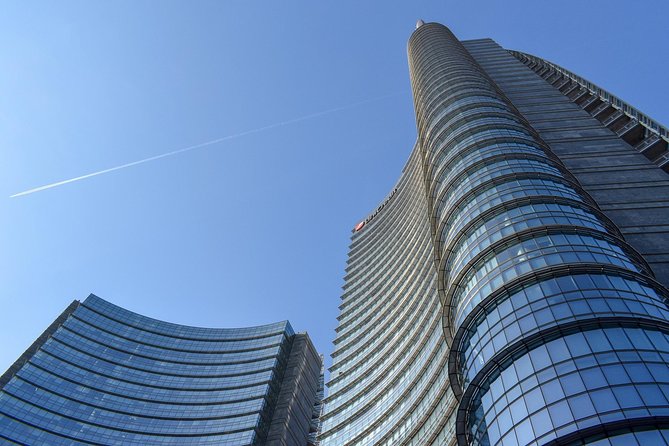
From Porta Nuova, the tour heads along Corso Como, which is known as a landmark street, especially with its lively evening vibe. Even if you are there in daylight, the guide’s framing helps you see why this street matters. It is not only about architecture, it is about how Milan uses public space day and night.
This stretch is also where the tour becomes more than a list of famous names. You learn the design logic behind the route: how districts connect, where the city funnels you, and why some places feel like gathering points. Corso Como gives you that “human scale” contrast, so the taller buildings do not feel like an overload.
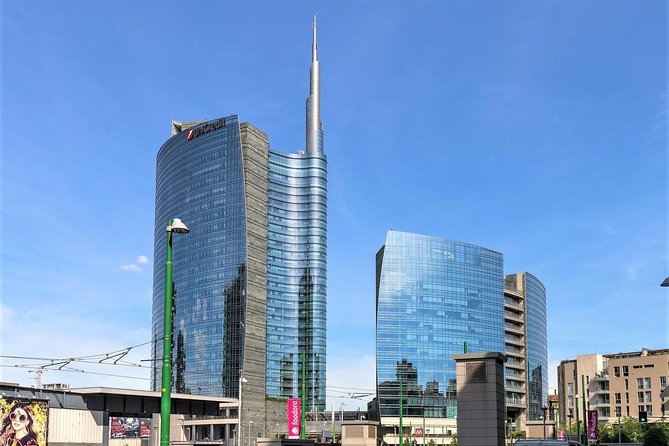
The next key moment is arriving at Gae Aulenti square, where the conversation turns directly to the Unicredit tower. This is a smart sequencing choice. It gives you a warm-up walk first, then asks you to focus on one of the skyline’s biggest anchors.
If you like architecture, but you also want your feet to feel useful, this section is a good balance. You are walking through a neighborhood with personality, not just moving between viewpoints like a checklist.
A different kind of day out of Milan:
- Milan: Cathedral and Duomo’s Terraces Entrance Ticket
★ 4.6 · 61,054 reviews - Milan: Milan Cathedral Direct Entrance – Terrace Excluded
★ 4.5 · 5,782 reviews - Milan: Navigli Canal Boat Cruise
★ 3.3 · 4,502 reviews - Milan: Serravalle Designer Outlet Roundtrip Bus Transfer
★ 4.4 · 4,374 reviews
Unicredit Tower at Gae Aulenti: the tallest landmark and why it matters
At Piazza Gae Aulenti, you see the Unicredit tower. The tour frames it as the tallest in Europe, which is a big claim, but it signals why it is such a focal point for Milan’s modern identity. You are not only looking at height. You are learning what a single landmark can do for an entire area’s reputation and sense of place.
Here is how I would interpret this for you as a traveler: when a city builds a “signal” skyscraper, it changes how people orient themselves. Streets feel different. Expectations change. Even the way photographers aim their lenses changes. This stop helps you notice that effect in real time.
Also, because the tour is guided by a professional art historian, the explanation tends to connect form to function and to broader design ambitions. That is valuable, since skyscraper watching can otherwise become shallow. With the guide’s context, the tower becomes a case study in what Milan chose to project after the Expo-driven regeneration.
One caution: the tour description emphasizes seeing the tower from the square and surrounding areas, not going inside. If you’re hoping for an observation deck experience at the top of the tower itself, this tour may not be the right fit based on the information provided.
Stop 3: Isola’s railing houses and the Vertical Forest reforestation idea
Next comes Isola, a historical district with unique “railing houses” that include common galleries and courtyards. This contrast is more than scenery. It is a way to understand Milan as layered, not erased. You see older forms of urban life, then you transition to an ecological design concept on the modern skyline.
Then the tour delivers the main attraction: the Vertical Forest towers. This project is described as being rewarded in 2016 as the most beautiful urban project of the World. The Vertical Forest concept is presented as a model of urban reforestation and biodiversity, aiming to regenerate the environment without expanding the city territory.
Here are the concrete details you’ll want to hold onto as you look at the towers: the towers are described as having 900 hundreds trees and more than 20 thousands plants. That number matters because it turns the idea from “green decoration” into an actual environmental statement. Even if you do not have time to think about the biology, you can think about the planning challenge: how to support plant life high above the street.
What I love about ending this way is that you leave with a stronger mental image than you started with. In a typical city, you might see trees and then separately see buildings. Here you get both in one frame, so the design message is hard to miss.
If you care about sustainability and want to see how that can show up in architecture, this stop is the reason the tour has staying power.
The Eataly finale: regional Italian tasting right where the tour ends
The last part of the tour brings you to Eataly, an Italian food brand known worldwide. This is where you get the payoff for your walking effort. Instead of just learning, you get to taste, and the timing is practical since the tour ends back at the meeting point.
The experience described here is broad. You can find regional typical foods from Valle d’Aosta to Sicily. That means your tasting options are not limited to one narrow corner of Italian cuisine. You can sample different flavors and specialties and connect them to the country-spanning idea that Italians love food as identity.
If you are traveling with someone who is less into architecture than you are, this ending helps. They may roll their eyes a bit at skyscrapers, then suddenly become interested when they smell the food and see the variety. Even if you are the architecture fan, it is still a smart close. After 3 hours of streets and buildings, your brain is ready for something delicious and easy.
A practical note: set expectations for Eataly as a tasting stop, not a formal meal. The tour info highlights sampling, so you should plan to treat it as a fun food interlude rather than a full dinner reservation.
Price and value: is $265.09 for 3 hours worth it?
The price is $265.09 per person, and the tour runs about 3 hours. That is not cheap, but it is also not a full day commitment, and you are paying for several things at once: a professional art historian guide, a private tour setup, and a route that targets high-demand modern Milan landmarks.
Value depends on how you travel.
If you like design and want explanations, a guided architecture walk can be more valuable than booking individual stops. You are not only paying for entry fees, you are paying for interpretation. With a private group, the guide can shape the pace and answer questions in the moment.
If you are traveling with friends or family, group discounts can make the math work better. The tour also uses a mobile ticket, and it is near public transportation, which helps you avoid extra transit costs and time.
One more thing to consider: it is often booked about 45 days in advance. That is a sign of popularity, and it suggests you may have fewer options if you wait too long. If you know you want the modern Milan skyline perspective, locking it in earlier makes sense.
Who should book this Milan skyscrapers tour, and who should skip it
This tour is a strong fit if you want:
- A focused walk through Porta Nuova, Corso Como, Gae Aulenti square, Isola, and the Vertical Forest concept
- Architecture context from a professional guide, not just photo stops
- A convenient ending at Eataly for regional tasting
It is less ideal if you:
- Want only medieval or old-town Milan and feel impatient with modern design districts
- Prefer indoor attractions with minimal walking
- Are expecting a tower ticket or a long transit day, since the tour is a guided neighborhood route with walking
The guide quality also matters. One note from the experience description highlights Valerio, and the warmth of that detail matters because a good guide can turn a hot afternoon into a memorable story. If you’re sensitive to weather, pick a day with better conditions or plan your hydration.
Should you book it?
If your Milan plan includes at least one deep look at modern architecture, I’d book this. It hits the main modern landmarks efficiently, it teaches you how Expo 2015 shaped the city, and it ends with a tasting stop that is fun even if you are not an architecture die-hard.
I would only hesitate if you dislike walking for about 3 hours, if you only want old-world sights, or if you expected major interior access beyond what is described. For most people who want a practical, guided view of Milan’s newer face, this is a smart way to spend a half afternoon, and Eataly makes the timing feel right.
FAQ
How long is the Milan skyscrapers guided tour?
The tour lasts about 3 hours.
Where does the tour start and end?
It starts at Eataly Milano Smeraldo, Piazza XXV Aprile, 10, 20121 Milano MI, Italy, and it ends back at the meeting point.
Is this tour private?
Yes, it is a private tour/activity, and only your group participates.
What’s included in the tour price?
The tour includes a professional art historian guide and the private tour experience.
Is hotel pickup included?
No, hotel pickup and drop-off are not included.
What does the tour include in terms of sights?
You’ll see the newer parts of Milan including Porta Nuova, Corso Como, Gae Aulenti square and the Unicredit tower, and the Vertical Forest towers in Isola, with the tour ending at Eataly for regional food sampling.
When can I cancel for a full refund?
You can cancel up to 24 hours in advance for a full refund. Cancellation less than 24 hours before the start time is not refunded.
Recently reviewed around Milan
- Milan Wine Tasting Experience★ 4.7 · 60 reviews
- Visit of Verona and Lake Garda. Full day tour from Milan★ 4.6 · 5 reviews
- From Milan: Villa del Balbianello and Varenna by Train★ 4.2 · 27 reviews
- Trekking in the Wood with picnic on the turtles lake★ 5.0 · 9 reviews
- taxi / transfer service to and from airports★ 5.0 · 51 reviews
- Explore History and Style with this Walking Tour in Milano★ 5.0 · 15 reviews
- Trekking in the Wood with picnic on the turtles lake★ 5.0 · 8 reviews
- Wine Tasting Experience in Milan City Center★ 4.5 · 32 reviews
Guided, compared.
City Sightseeing Hop-On Hop-Off Bus with Audio Guide
Read our review →
Guided Walking Tour & Last Supper Visit with Ticket
Read our review →
Fast-Track Milan Cathedral and Terraces Guided Tour
Read our review →
Duomo Rooftop and Cathedral Guided Tour with Tickets
Read our review →
Sforza Castle Entry Ticket with Digital Audio Guide
Read our review →