Reviewed · GUIDED
Jewish Guided Tour in Milan
Milan is a fast city to learn once you have a route and a story to hang things on. This 3-hour Jewish guided walk links big public landmarks with Jewish life in the city, then ends with an escorted arrival at Milan’s Holocaust Memorial area.
I really like the way the tour uses the street-level details you would normally walk past. It also helps that the guiding can be led by standout communicators like Galit and Nuki, who are known for pointing out the kinds of small facts you miss on your own.
One thing to plan for: the synagogue visit has a suggested donation of at least 10 euros per person, and in August it needs prior coordination because hours can be limited. Also, this does not include a separate Holocaust Museum tour.
Key things to know before you go
- A 3-hour, heart-of-Milan route that keeps the story centered in the city, not in a distant neighborhood.
- A synagogue stop with a donation requirement, so bring cash or be ready to coordinate in advance.
- Limited-group feel, with a maximum of 8 travelers, which usually makes Q and A easier.
- WWII and Mussolini context is woven into the walk at Piazza del Liberty, not dumped into a lecture.
- A guided finish at the Holocaust Memorial area, plus metro escort to the museum entrance area.
- Small-picture history plus big-city orientation, starting with San Babila and Milan basics.
Why this Jewish Milan route works in just 3 hours
If you only have a short window in Milan, you want something that gives you bearings fast. This tour does that by mixing city orientation with focused Jewish themes, so you end with a clearer mental map of where the story fits in the real streets.
The value is in the balance. You get architecture and symbols at Duomo Square, you get WWII-era context at Piazza del Liberty, and you get an actual stop inside Sinagoga Centrale. That combination is hard to replicate on your own in a limited time frame.
The group size matters too. With a maximum of 8 people, you are less likely to get lost in the back row when questions come up, and you tend to get more meaningful commentary.
A few more Milan days worth comparing
- Milan: City Sightseeing Hop-On Hop-Off Bus with Audio Guide
★ 4.0 · 6,256 reviews - Milan: Guided Walking Tour & Last Supper Visit with Ticket
★ 4.7 · 5,409 reviews - Milan: La Scala Theater & Museum Guided Experience
★ 4.1 · 2,931 reviews
Meet at Corso Monforte, then get oriented quickly
Your start point is Corso Monforte, 2 in central Milan. From there, the guide sets up the walk with Milan in general, past, present, and future, so you know what kind of city you are looking at while you walk.
This opening is useful even if you have already skimmed a guidebook. Milan can feel like a clean fashion postcard if you only look at the surface, but the walk frames the city as something shaped by different eras, politics, and communities.
Time is tight here on purpose, about 20 minutes at the first stop. You are meant to get your bearings without losing momentum.
San Babila: Milan basics you can actually use
The first stop is San Babila. It is not just a photo stop, it is where you learn how to think about Milan as you move through it.
At this point, I like that the focus is on context rather than trivia. You hear how Milan evolved and how to read the city as you go, which makes the next streets feel connected instead of random.
Admission is free here, so you are not spending time on ticket lines or timing challenges. That keeps the overall pacing smooth for a short, 3-hour format.
Corso Vittorio Emanuele II: royalty, dynasties, and the way the city is built
Next you walk to Corso Vittorio Emanuele II. This section is about Vittorio Emanuel and the royal houses dynasty story, with the added angle of how Milan’s streets and layout tie back to those eras.
For me, this is one of the best “bridge” moments on the tour. It helps you connect what you see in front of you to why the city looks the way it does, instead of treating landmarks like isolated monuments.
It is scheduled for about 25 minutes, and you stay in the flow. That matters because the walk is designed to keep the story moving through the city rather than pausing too long.
A different kind of day out of Milan:
- Milan: Cathedral and Duomo’s Terraces Entrance Ticket
★ 4.6 · 61,054 reviews - Milan: Milan Cathedral Direct Entrance – Terrace Excluded
★ 4.5 · 5,782 reviews - Milan: Navigli Canal Boat Cruise
★ 3.3 · 4,502 reviews - Milan: Serravalle Designer Outlet Roundtrip Bus Transfer
★ 4.4 · 4,374 reviews
Piazza del Liberty: WWII and Mussolini in the real city
Then you reach Piazza del Liberty, where the guide brings in World War II and Mussolini. This is the kind of subject you can easily overdo, but here it is treated as part of the city’s layers, not a separate history class.
The timing is about 20 minutes. That is long enough to understand why this era matters to Jewish history in Italy and Milan, but short enough that you do not feel crushed under one topic before the more personal part of the tour begins at the synagogue.
Admission here is free, which also helps psychologically. You can focus on the meaning of the stop rather than thinking about entry rules or additional costs.
Monumento a Cesare Beccaria: law, ideas, and contribution
Stop four is the Monumento a Cesare Beccaria. The commentary here centers on Bakria and his contribution to the world of law in Italy, framed through Beccaria’s legacy in legal thinking.
Even if you know almost nothing about legal history, this stop can help you see a bigger picture. Jewish history in Milan is not only about residence and places of worship. It is also about ideas, influence, and how people contributed to public life.
The stop is about 20 minutes and free to see. It gives you a mental reset before the tour shifts toward religion and community life.
Sinagoga Centrale: the highlight stop, with a donation and August planning
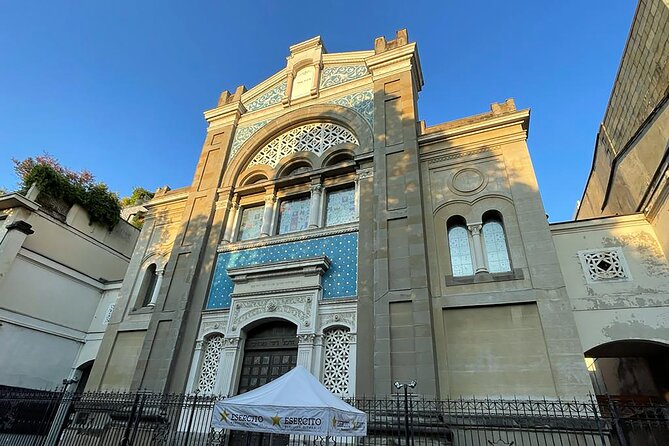
Now you arrive at the synagogue, Sinagoga Centrale. This is the emotional and historical center of the walk, and it is where you get a direct look at Jewish religion and history in Italy and Milan.
Plan around the cost. Entrance is not included. There is a donation of at least 10 euros per person, and you need to coordinate the entrance with the tour team in advance.
There is also a season note that you should take seriously. During August, visiting the synagogue requires prior arrangement because opening hours can be limited. If you are traveling in summer, I would contact the operator early rather than assuming walk-up entry will work.
The visit itself is scheduled for about 20 minutes. That may sound short, but for many people it is the right length in a 3-hour day. You get the essentials without spending your whole afternoon inside.
Piazza del Duomo: similarities and differences, plus Jewish symbols on the cathedral
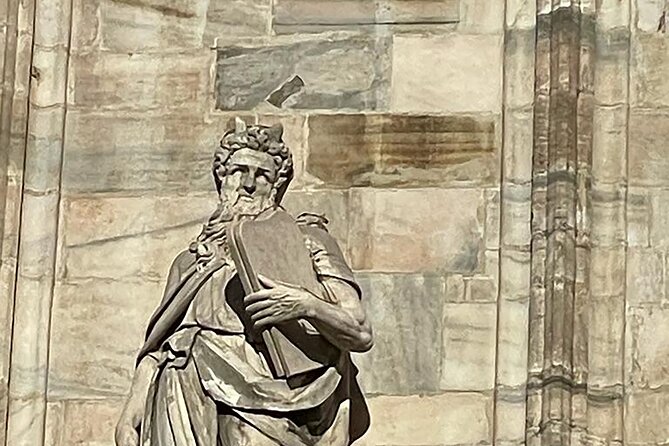
After the synagogue, you arrive at Piazza del Duomo. This stop is about similarities and differences between Judaism and Christianity, tied directly to what you see in the architecture.
This is smart because it keeps theology grounded in visuals. You are not asked to memorize definitions on the street, you are shown how symbols and shared religious roots can show up in art and building design.
You also get a chance to focus on Jewish symbols on the Duomo. Even if you have seen the cathedral before, having a guide point out specific references can completely change what you notice when you look up.
The scheduled time here is about 25 minutes, and admission is free. That makes it a strong “payoff” moment, since the city already has so much to offer at Duomo.
Rinascente Milano: quick high-city views and a lesson in vertical Milan
Next comes Rinascente Milano, where you get time to see the city from above. This segment is about high-rise buildings in Milan and Italy.
This is a good palate cleanser between the heavier history stops and the ending at the Holocaust Memorial area. Views also help you connect the map in your head to the geography outside your window, especially if you have been moving through busy streets.
The stop is about 15 minutes and free. If you hate fast transitions, this might feel a little quick, but it is easy to accept because the tour is already structured around a tight 3-hour total.
Ending at the Holocaust Memorial area: escorted metro to the museum entrance
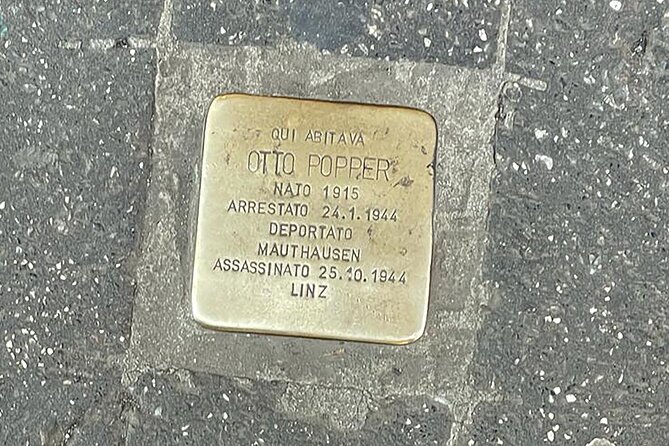
The tour finishes near the Holocaust Memorial site in Milan, with the meeting end in front of the Holocaust Memorial area and escort included. The experience also includes guidance to the Holocaust Memorial area, including traveling together on the metro and arriving at the entrance to the Holocaust Museum.
This is where the tone matters. You should treat the end portion with the respect it deserves, slow down your pace, and let the guide’s framing land before you rush onward.
Also note the practical limitation. This tour does not include a tour of the Holocaust Museum itself. So if you want to read exhibits in depth, plan extra time after the walk ends, so you are not trying to do everything at once.
The end point is Via Dante, which is a helpful anchor because you can continue your day from there.
Price and value: is $120.48 a fair deal?
At about $120.48 per person for roughly 3 hours, the price is not a bargain, but it is also not out of line for a licensed guide plus a synagogue visit structure and an escorted transit finish.
Here is where the value comes from:
- You get a licensed or certified in-person guide, which matters for historical accuracy and for handling sensitive context carefully.
- You get a guided synagogue stop (with a separate donation), not just a street view.
- You get escorted metro travel to the Holocaust Memorial area, including arriving at the Holocaust Museum entrance.
Where you should factor in extra spending:
- The synagogue donation is at least 10 euros per person.
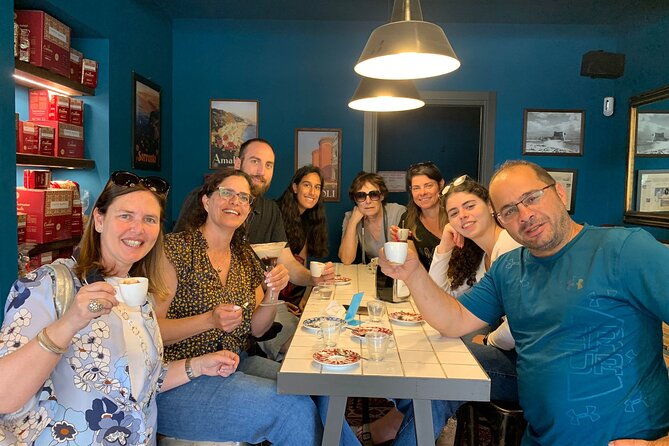
- Coffee or tea is not included.
My take: if you care about Jewish history in Milan and you want it explained clearly in a compact time window, the price makes sense. If your priority is self-guided sightseeing with lots of wandering time, you might feel the structure is less flexible.
Who this tour fits best (and who might prefer something else)
This is best for you if:
- You want a guided route that ties Jewish history to central Milan landmarks.
- You like the combo of city orientation, WWII context, and a real synagogue visit.
- You prefer small group interaction, with up to 8 travelers.
It might be less ideal if:
- You want to spend a long time inside the Holocaust Museum exhibits. This experience escorts you to the entrance, but it does not include the museum tour.
- You are visiting in August and you cannot coordinate the synagogue donation and entry timing in advance.
A nice bonus for first-timers is that Milan does not necessarily have a single obvious Jewish quarter you can just “walk through.” This route focuses on Jewish connections across the city, which is often what people actually want when they have limited time.
Planning tips so your day runs smoothly
Because the tour is only about 3 hours, preparation helps:
- Wear comfortable shoes for steady walking across multiple central stops.
- Keep some cash or payment method handy for the synagogue donation requirement.
- If you are traveling in August, reach out early to coordinate synagogue entry due to limited hours.
- Bring your curiosity for architecture and symbols at Duomo, because that is where the tour’s explanations can really change how you see the cathedral.
You will also get a mobile ticket, which is useful for reducing paper clutter and speeding up check-in.
And since this tour is commonly booked about 25 days in advance, I would not treat it as a last-minute option if you are traveling during busy periods.
Should you book Jewish Guided Tour in Milan?
If you want a structured, high-impact way to learn Jewish Milan quickly, I think you should book. The tour’s strongest points are the citywide storytelling, the focus on meaningful stops, and the way the synagogue visit is handled with clear guidance and coordination.
I would book especially if you value a small group and you appreciate guides who point out the details most people miss. The names Galit and Nuki come up for a reason, and that style of careful noticing is exactly what turns a short walk into a real understanding of the city.
Book with a small adjustment: plan extra time if you want more than just entry at the Holocaust Museum. And if you are going in August, coordinate the synagogue visit early so you are not trying to solve timing problems on the spot.
FAQ
How long is the Jewish guided tour in Milan?
The tour lasts about 3 hours.
What does the tour cost, and what language is it in?
It costs $120.48 per person, and it is offered in English.
Is the synagogue entrance included?
No. Entrance to the synagogue requires a donation of at least 10 euros per person, and you need to coordinate your entrance with the tour team in advance.
Does the tour include the Holocaust Museum exhibits?
No. The tour does not include a tour of the Holocaust Museum. It does include escort and guidance to reach the Holocaust Museum entrance area.
How many people are in the group?
The tour has a maximum of 8 travelers.
Where do the tour start and end?
The tour starts at Corso Monforte, 2, 20122 Milano MI and ends at Via Dante in the Holocaust Memorial area.
Recently reviewed around Milan
- Milan Wine Tasting Experience★ 4.7 · 60 reviews
- From Milan: Villa del Balbianello and Varenna by Train★ 4.2 · 27 reviews
- Visit of Verona and Lake Garda. Full day tour from Milan★ 4.6 · 5 reviews
- Trekking in the Wood with picnic on the turtles lake★ 5.0 · 9 reviews
- taxi / transfer service to and from airports★ 5.0 · 51 reviews
- Explore History and Style with this Walking Tour in Milano★ 5.0 · 15 reviews
- Trekking in the Wood with picnic on the turtles lake★ 5.0 · 8 reviews
- Wine Tasting Experience in Milan City Center★ 4.5 · 32 reviews
Guided, compared.
City Sightseeing Hop-On Hop-Off Bus with Audio Guide
Read our review →
Guided Walking Tour & Last Supper Visit with Ticket
Read our review →
Fast-Track Milan Cathedral and Terraces Guided Tour
Read our review →
Duomo Rooftop and Cathedral Guided Tour with Tickets
Read our review →
Sforza Castle Entry Ticket with Digital Audio Guide
Read our review →