
Reviewed · CITY TOURS
Cremona: City of art and music in Italian
Cremona has a way of turning everyday streets into something you can hear and see. This guided city-center walk connects music, art, and brick monuments in about 1.5 hours, with real stops in the spaces that shaped the city. You’ll move at a steady pace, starting right at the tourist office and finishing where you began.
Two things I really like: the chance to go inside the Cathedral to see its 16th-century frescoes, and the way the guide explains Cremonese violin-making as a UNESCO Intangible Heritage tradition. It’s not just sightseeing, it’s context you can carry with you when you look at the city.
One thing to consider: you’ll see some big icons from the outside only, like the Baptistery and the Torrazzo. If you’re hoping for full interior time in every landmark, you may feel a little limited by the format.
Key highlights you should care about
- Cathedral interior focus with 16th-century frescoes in the medieval square setting
- Palazzo Comunale interior with monumental civic rooms and guided explanation
- UNESCO lutherie tradition explained in a way that makes sense as you walk through town
- Big brick landmarks from outside including the octagonal Baptistery and the Torrazzo
- Photo stops at Torrazzo-related sites, including Museo Verticale del Torrazzo
- A Roman road thread in the route, connecting Cremona’s layers beyond the medieval center
1. A 90-minute walk through Cremona’s art, music, and brick monuments
This is a compact guided walking tour in Lombardy that runs about 1.5 hours. At this length, you’re not stuck all day, but you still get real access to interior spaces, plus enough outdoor monuments to understand why Cremona is famous.
What makes it especially satisfying is the mix. You start in the historic center’s major medieval spots, then your guide ties the scenery to Cremona’s musical identity, particularly the craft tradition of violin-making. It’s a tour where the details actually change how you look at the buildings.
The price, listed at $17 per person, is also a big part of the value. You’re paying for live guidance and entrance access to two key interiors, not just a stroll with a map.
A few more Milan days worth comparing
- Milan: City Sightseeing Hop-On Hop-Off Bus with Audio Guide
★ 4.0 · 6,256 reviews - Transfer Milan City Centre – Bergamo Airport
★ 4.5 · 975 reviews - Milan: The Milan Pass City Card
★ 4.0 · 655 reviews
2. Start at Infopoint Cremona, then let the guide set the rhythm
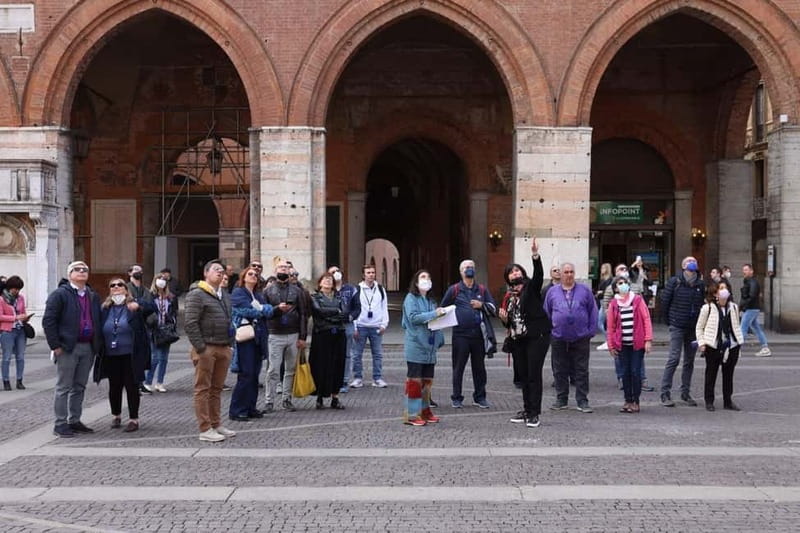
You meet at Infopoint Cremona, Ufficio Informazioni. From there, the tour follows a sensible path through the central area, with short photo stops and then short, guided time in the places that matter.
This start location is practical. It’s right where most visitors naturally begin their planning, so you’re not hunting for a hidden corner. It also helps you get grounded fast, since you’ll launch into the main square area almost immediately.
Because the guide speaks Italian, it’s best if you’re comfortable following guided explanations in Italian. If not, you’ll still catch plenty visually, but the storytelling about art and lutherie may be less accessible.
3. The Cathedral of Cremona: frescoes that earn the Sistine Chapel nickname
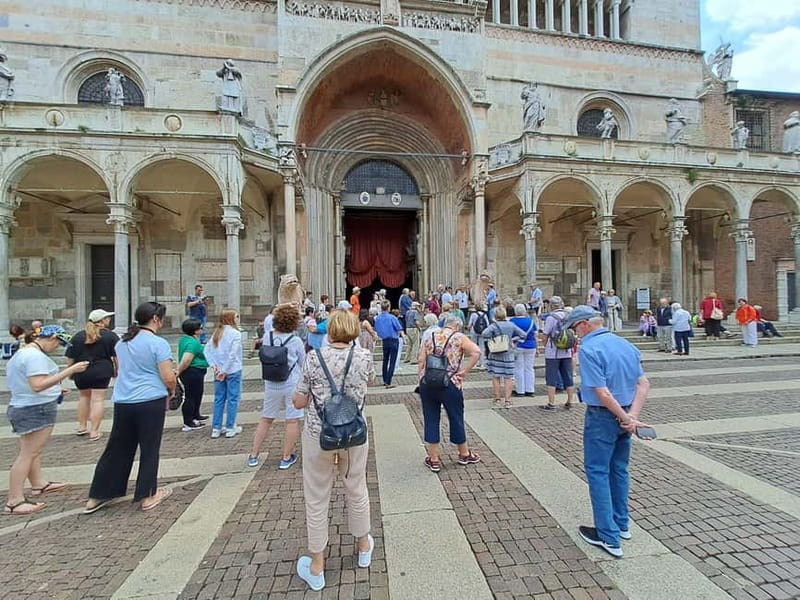
The first major moment is the Cremona Cathedral. You’ll have a photo stop and then time inside with the guide. This church is often described as the Sistine Chapel of the Po Valley, and the name is tied to the impact of its painted interior.
The guide highlights its 16th-century frescoes, and that matters because fresco work is best understood when someone points out what you’re actually looking at. Instead of just admiring the ceiling as decoration, you get help reading it as part of Cremona’s artistic identity.
One smart thing about this stop is the way it anchors the tour visually. You’re in a setting that shaped civic and religious life, and once you’ve seen the frescoes, everything else in the center feels more meaningful. The square, the civic buildings nearby, even the outdoor monuments later, all start to look like they belong to the same long story.
4. Palazzo Comunale inside: seeing how the city ran
Next you head to the Comune di Cremona, the city hall area, where you get another photo stop before stepping into the interior. The highlight here is the Palazzo Comunale and its monumental rooms.
This is one of my favorite kinds of stops. Churches are common on Italian tours, but civic buildings are what reveal how power and community worked day to day. With a guided explanation of what you’re seeing in the rooms, you get a clearer sense of Cremona as a functioning center, not just a backdrop for photos.
There’s also a practical consideration baked into the schedule. The Town Hall interior visit is tied to days when it is open. It is open from Monday to Saturday, and closed on Sundays and festive days. So if your trip falls on a Sunday or a holiday, you may not get the same interior experience.
If you’re the type who likes learning what a city valued enough to build, furnish, and preserve, this stop is worth showing up for.
A different kind of day out of Milan:
- Milan: Cathedral and Duomo’s Terraces Entrance Ticket
★ 4.6 · 61,054 reviews - Milan: Milan Cathedral Direct Entrance – Terrace Excluded
★ 4.5 · 5,782 reviews - Milan: Guided Walking Tour & Last Supper Visit with Ticket
★ 4.7 · 5,409 reviews - Milan: Navigli Canal Boat Cruise
★ 3.3 · 4,502 reviews
5. Baptistery and Torrazzo from the outside: the scale hits when you can’t miss it
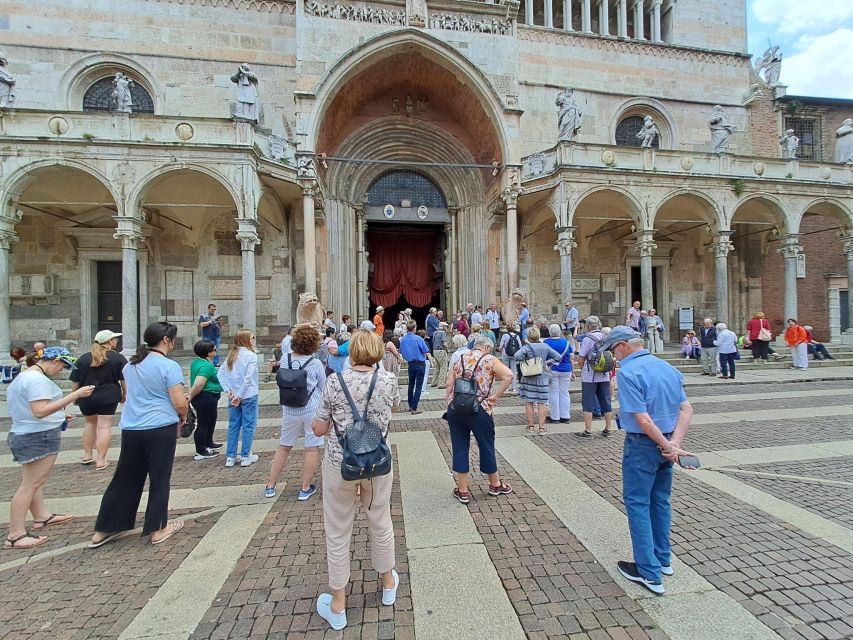
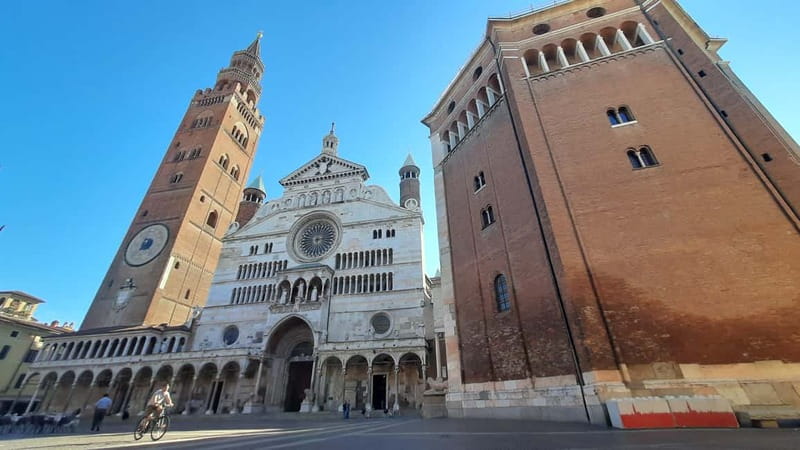
After the interiors, the tour shifts to the monumental outside landmarks. The Baptistery is one of them, described as an octagonal structure. You’ll see it from outside during the walk.
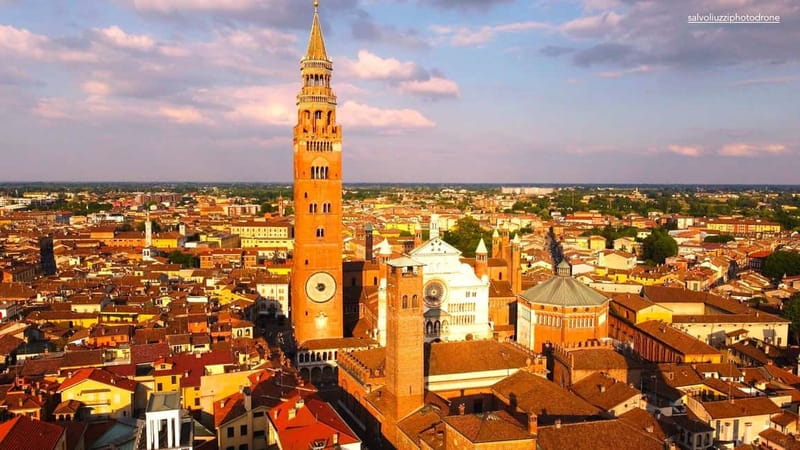
Then comes the Torrazzo. You’ll view it from outside as well, but it’s impossible to treat as background. It’s noted as the tallest brick bell tower in Europe, and seeing that kind of height in person changes the feel of the whole city center. In photos it can look like just another tower. In the street, it becomes a physical presence.
You’ll also make an external stop for the Loggia dei Militi. Like many loggias, it works best when you view it in context, since it’s part of the way public life is shaped by sheltered space and architectural rhythm.
There’s even a photo stop at the Museo Verticale del Torrazzo di Cremona. You’re not necessarily going inside on this tour, but the timing gives you a moment to connect what you’ve seen with what’s associated with the tower.
6. Cremonese lutherie: UNESCO violin-making you can understand while walking
This tour’s standout theme is Cremonese lutherie, the tradition of violin-making, recognized as a UNESCO Intangible Heritage. The guide weaves this craft story into the route, so it doesn’t feel tacked on.
Why this matters is simple: you’ll stop treating art and architecture as isolated beauty. Instead, you see Cremona as a place where skills, workshops, and cultural identity reinforced each other over time. Once you hear the guide’s explanation, the city’s artistic reputation feels less like a marketing slogan and more like a working tradition.
I especially like how this kind of topic changes the “what should I look at” question. If you’re a music lover, you’ll start thinking about how craftsmanship and sound connect to daily life. If you’re more of a history person, you’ll start noticing how reputation builds around specialized knowledge.
If you’re traveling with kids, music students, or anyone who has played an instrument, this stop often lands well because it turns the word tradition into something concrete: a creative craft with cultural weight.
7. A Roman road under the route: the long timeline of Cremona
One of the quieter, more interesting parts of the experience is the mention of a Roman road from the 1st century BC. During the walk, you continue along this route segment, which adds a time layer beyond medieval churches and civic rooms.
It’s the kind of detail that makes a city feel real. You stop seeing streets as fixed scenery and start seeing them as routes that carried people long before the current monuments were built. You get an early sense of why Cremona could grow into an art and music center: it was positioned where movement, trade, and settlement could build momentum.
Even if you don’t know Roman history in depth, the guide’s way of framing this makes it easy to connect the timeline.
8. Value check: what your $17 is really buying
At about $17 per person, this tour is priced for what you get, not for what you might wish you got. Your included time covers a guided walking tour of the historic center, interior visits to the Cathedral and the City Hall, plus guided insights into Cremonese lutherie.
That combination is the core value. Walking tours are everywhere, but interior access and guided interpretation are less common in short tours. In a place like Cremona, where the best experiences are often tied to specific buildings, getting inside twice helps justify the cost.
Also, the tour is wheelchair accessible. If mobility is a factor for you, it’s good to have at least this assurance based on the activity description.
9. Best fit, and when you might want a different plan
This tour is a strong match if you:
- want a focused introduction to Cremona’s central sights in about 1.5 hours
- care about art plus a meaningful cultural thread, like UNESCO lutherie
- prefer guided explanation over wandering alone
- like seeing both religious and civic buildings
It may be less ideal if you:
- strongly prefer to see everything from the inside, since some key landmarks are external views in this format
- need a guide who speaks a language other than Italian, since this tour is Italian-language only
As a practical note, check whether your day includes Town Hall access. The interior visit depends on opening days, since it is closed on Sundays and festive days.
Should you book this Cremona walking tour?
Yes, I think you should book it if you want an efficient, well-structured introduction to Cremona that goes beyond facades. The Cathedral and Palazzo Comunale interiors are the kinds of stops you remember, and the Cremonese lutherie UNESCO focus gives the walk a clear theme that ties the city together.
Just make sure you’re comfortable with an Italian-language guide and the fact that the Baptistery and Torrazzo are viewed from outside. If that fits your expectations, this is excellent value for a short walking tour that actually explains what you’re seeing.
FAQ
Where do I meet for the tour?
You meet at Infopoint Cremona, Ufficio Informazioni.
How long is the guided tour?
The tour lasts about 1.5 hours.
What will I see inside the Cathedral and the Town Hall?
You visit the interior of the Cremona Cathedral, including its frescoes, and you also visit the interior of the City Hall (Palazzo Comunale) with monumental rooms.
Are the Baptistery and Torrazzo visited inside?
You see both the Baptistery and the Torrazzo from the outside during the walk.
What language is the live guide?
The tour guide speaks Italian.
Is the tour wheelchair accessible?
Yes, the activity is listed as wheelchair accessible.
Recently reviewed around Milan
- Milan: The Story of Leonardo da Vinci Private Guided Tour★ 5.0 · 5 reviews
- THE WORLD OF BANKSY. THE IMMERSIVE EXPERIENCE – MILANO VARESINA 204★ 4.5 · 42 reviews
- The Monumental Cemetery of Milan: Discover the Unexpected★ 5.0 · 5 reviews
- Milan: Piazza Gae Aulenti and Pelli Tower Walking Tour★ 4.7 · 3 reviews
- Milan: Private or Shared Essential Walking Tour★ 4.7 · 84 reviews
- Milan: Bike Tour with Picnic on the turtle lake★ 4.9 · 40 reviews
- Milan | In the Crypt of time, holographic tour★ 4.6 · 77 reviews
- Milan: Test Drive a Ferrari 458 on a Race Track with Video★ 4.4 · 52 reviews
City Tours, compared.
City Sightseeing Hop-On Hop-Off Bus with Audio Guide
Read our review →
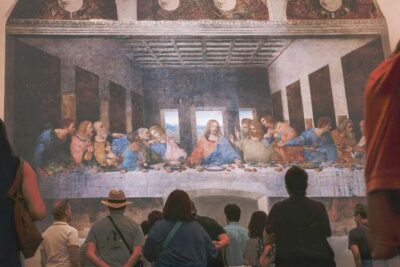
Guided Duomo, Last Supper and City Centre Tour
Read our review →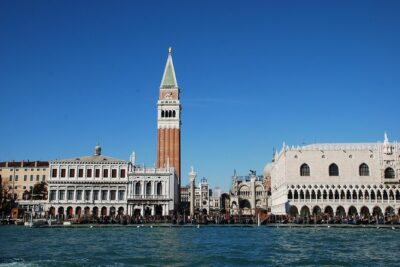
Venice Day Trip from Milan with Guided City Tour
Read our review →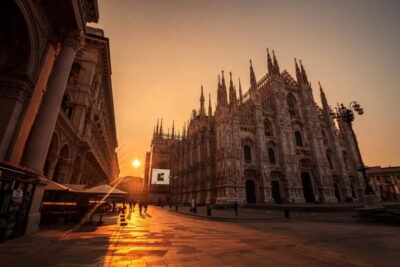
Best of City Walking Tour with Last Supper Tickets
Read our review →
eBike City Tour Guided by an iPad and a Tour Leader
Read our review →Browse the lists this tour appears in