Reviewed · TICKETS
Milan: Pinacoteca Ambrosiana and San Sepolcro Crypt Ticket
What makes the Pinacoteca Ambrosiana and San Sepolcro ticket so interesting is the contrast: you start with major Renaissance paintings and a bookish treasure room, then go underground to a medieval church built on older Milan. I love how the visit puts Leonardo da Vinci’s Codex Atlanticus on display in a real reading-room setting, and I also love the chance to stand close to the Raphael School of Athens cartoon. One consideration: the crypt has architectural barriers, so this combo is not the easiest choice if you need full wheelchair access.
I like that you get one flow through two sights, with skip-the-line entry and enough time to slow down. The schedule matters, though: the Pinacoteca visit usually runs about 1.5 hours, and the crypt can take 30 to 40 minutes, with last crypt admission at 5:30 PM.
Key things you will notice right away
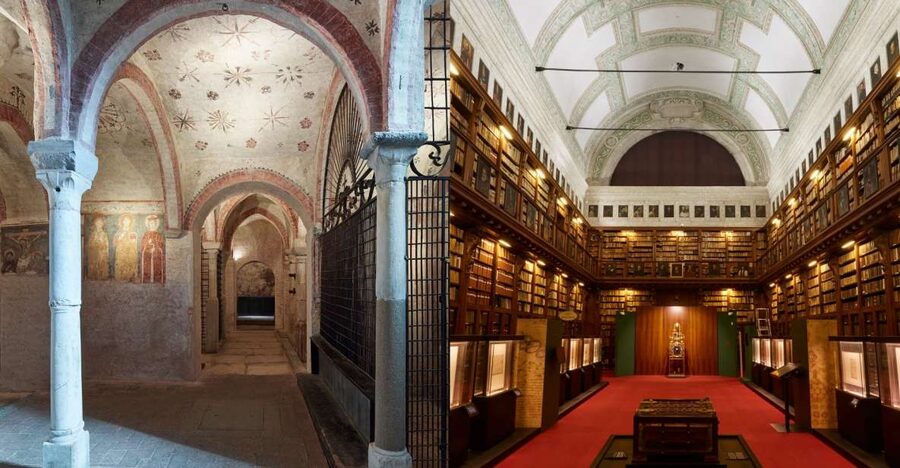
- Leonardo’s Codex Atlanticus drawings in the Ambrosiana library’s 17th-century reading-room setting
- Raphael’s School of Athens cartoon and other top masters (Caravaggio and more) in one manageable museum
- Caravaggio, Brueghel, and Flemish and Italian highlights presented in a way that feels calm, not rushed
- Ancient Mediolanum stonework under your feet at the San Sepolcro Crypt
- Ceiling details in the crypt that are worth a deliberate look, not just a quick pass-through
Pinacoteca Ambrosiana: the Milan art stop that feels quieter (and smarter)
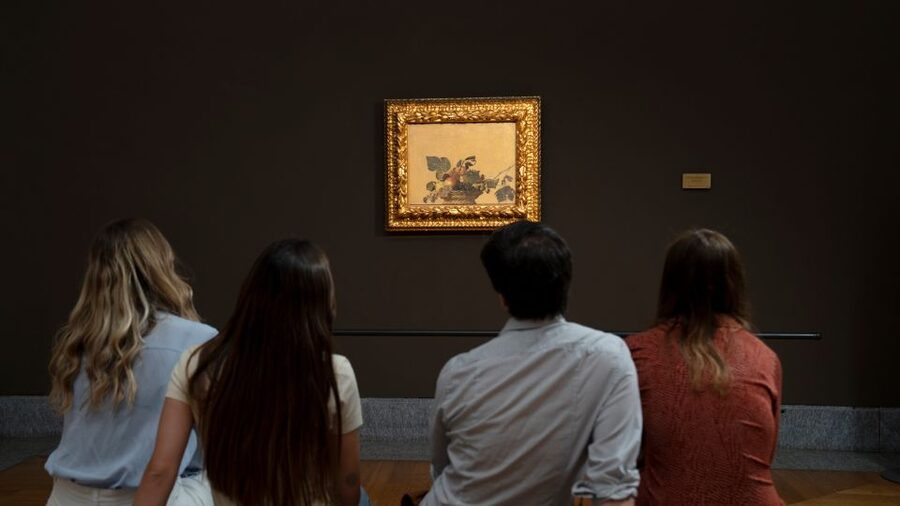
Pinacoteca Ambrosiana is the kind of place I always hope I can find on a first trip to Milan. It has world-class works, but it does not try to be an all-day amusement park. Instead, it is focused, with a layout that lets you see the big names without burning your whole afternoon.
You’ll start at Piazza Pio XI 2 and move through the museum at your own pace. The museum’s total time is usually about 1.5 hours, which is long enough to really look, and short enough that you still have time to head into the crypt without stress.
I also appreciate the vibe. Multiple visitors note it is not overly crowded, so you can actually take your time with details. That matters here, because some of the best moments are the small ones: how a drawing line is built, or how a painting is lit in the gallery.
A few more Milan days worth comparing
- Milan: Cathedral and Duomo’s Terraces Entrance Ticket
★ 4.6 · 61,054 reviews - Milan: Guided Walking Tour & Last Supper Visit with Ticket
★ 4.7 · 5,409 reviews - Milan: Leonardo3 The World of Leonardo Museum Entry Ticket
★ 4.4 · 3,241 reviews
What you will see: Leonardo, Raphael, Caravaggio, and the masters you actually came for
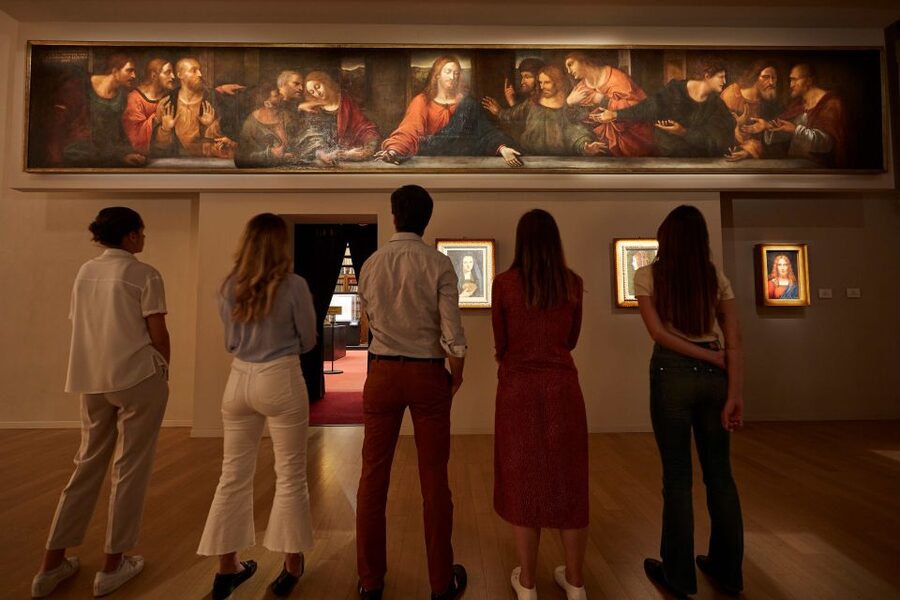
The art collection is the headline, and it lives up to the billing. You can expect iconic works tied to some of the most famous names in Italian art, including Caravaggio’s Basket of fruit, the Raphael cartoon for the School of Athens, Brueghel’s Vase of flowers, and Leonardo da Vinci’s portrait of the Musician.
Here is why that lineup is such good value. In a lot of museums, you get one or two big hits and then a lot of filler. At the Ambrosiana, the major artists are built into the experience, so even if you only have a couple hours, you still leave feeling like you saw the point of the place.
Lighting and presentation can affect how paintings land, and at least one visitor mentions some lighting can feel a bit iffy in parts. That said, the overall setup is often described as thoughtfully presented, and several people highlight how the museum is beautifully lit. Translation for your planning: do not rush through the galleries just to check boxes. Stop and look long enough for the lighting to make sense.
Also, this museum is not only paintings. You are walking through a building with a strong identity, and visitors repeatedly call out how special the interior is, not just the works inside. The architecture gives you a reason to pause between rooms.
The library reading room and Codex Atlanticus: why this is the real reason many people book
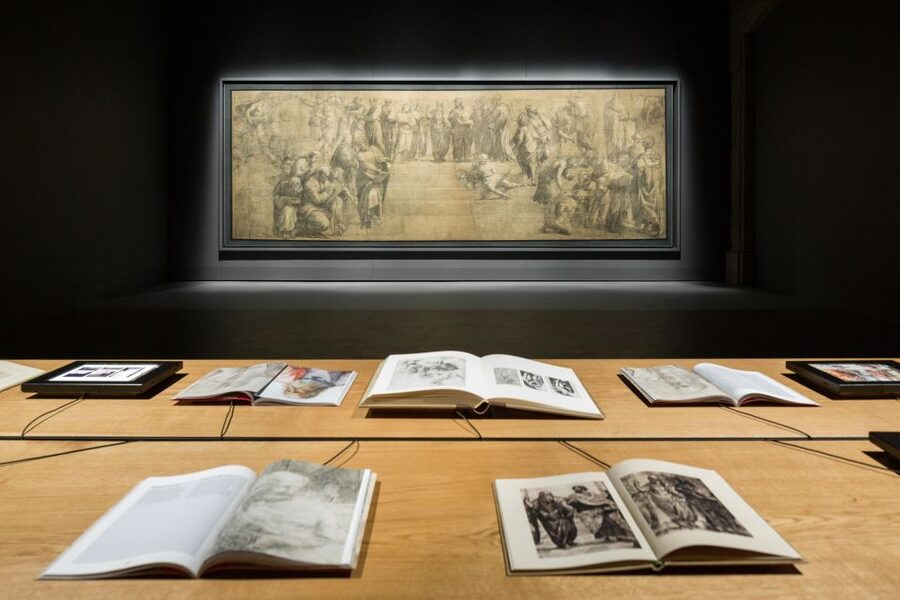
If you are the type who loves museums that smell like paper and ideas, this part is for you. The Ambrosiana’s library includes a 17th-century reading room where you can see Codex Atlanticus material tied to Leonardo da Vinci.
The key detail is that you are not just seeing reproductions. The reading room setting is built around original drawings, shown as part of the Codex Atlanticus exhibition. This is one of those rare museum moments where the “how” and “where” matter as much as the “what.”
You’ll also get a strong sense of Leonardo’s process, because drawings and notes do not work like finished paintings. They show choices, corrections, and thinking in motion. Even if you are not a hardcore art nerd, that mental shift is usually what makes people feel moved. It is the difference between seeing a result and seeing an engine.
There are also extra ways to connect the dots. Many visitors point to the audio guide as a big help for understanding what you’re looking at. Even people who walk through self-guided often say the library rooms and Leonardo material are the highlight. If you like museum context, plan to spend extra time here and do not treat it like a quick photo stop.
How the Pinacoteca galleries pace your afternoon (and how to avoid timing trouble)
A combined ticket is only fun if it does not turn into a race. Here’s how the timing typically works: the Pinacoteca visit runs about 1.5 hours, and the crypt takes around 30 to 40 minutes.
Now add the hard stop. The crypt’s last admission is at 5:30 PM, and the crypt closes at 6:00 PM. So you need to finish your Ambrosiana time in time to get your entry slot to the crypt. Practically, I recommend building in a buffer. If you get pulled into one room longer than expected, you do not want to lose the crypt.
One of the easiest mistakes is overcommitting to the art and forgetting that the last part is time-sensitive. If you enter with a plan like, “Codex Atlanticus reading room first, then Raphael and Caravaggio, then wrap up,” you’ll keep the day enjoyable. If you wander with zero structure, you might still be fine, but you take on risk with the final admission window.
Also, the visit is not described as fully wheelchair accessible because of crypt barriers. Most Pinacoteca exhibition rooms are wheelchair accessible, so the best approach for mobility needs is to prioritize the museum and treat the crypt as secondary. If you know you might struggle with stairs or uneven architectural features, plan around that from the start.
A different kind of day out of Milan:
- Milan: City Sightseeing Hop-On Hop-Off Bus with Audio Guide
★ 4.0 · 6,256 reviews - Milan: Milan Cathedral Direct Entrance – Terrace Excluded
★ 4.5 · 5,782 reviews - Milan: Navigli Canal Boat Cruise
★ 3.3 · 4,502 reviews - Milan: Serravalle Designer Outlet Roundtrip Bus Transfer
★ 4.4 · 4,374 reviews
San Sepolcro Crypt: the medieval church under ancient Milan, with stone under your feet
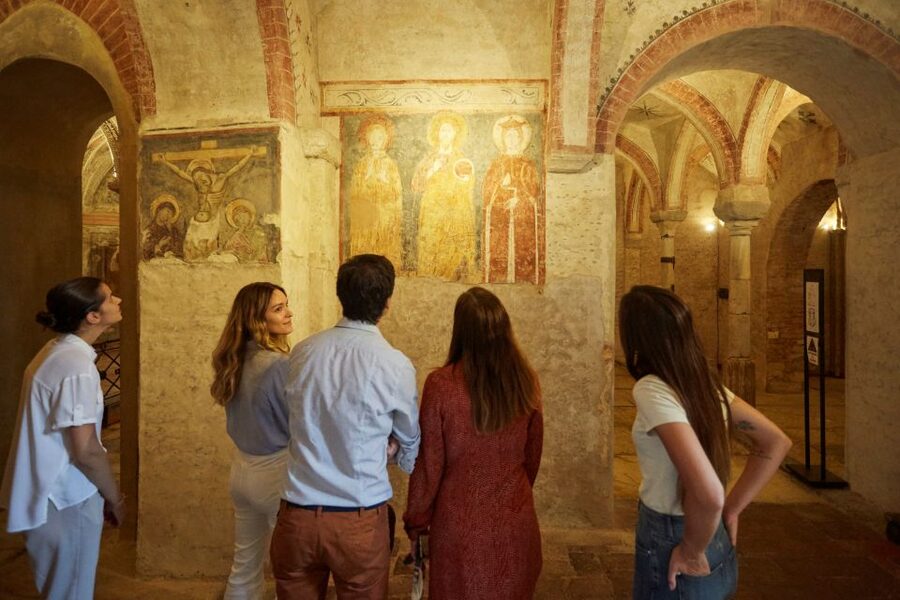
After the Pinacoteca, you’ll exit on Piazza San Sepolcro, where the crypt entrance is located. This is a medieval hypogean church, meaning it is built below ground level, and it is directly connected to the city’s older layers.
The most memorable detail is the pavement. The crypt flooring was made using ancient stones from Mediolanum, the Roman name for Milan. That turns the crypt from a simple “basement church” into a physical reminder that you are standing where the city used to be.
What to expect in the crypt itself: you are descending into a space that feels more architectural than cinematic. Some visitors say it can feel small or simple if you go in expecting a dramatic wow moment. Others say it becomes far more satisfying once you understand what you’re looking at, especially the way the space is tied to the older city.
So aim for the right mindset. Go in ready to observe details and follow the story. Look at the ceiling as well. One visitor calls out checking the ceiling, and another says the crypt feels like a window into the past once the details click. Even if you keep your visit short, make sure you glance upward at least once.
Time-wise, you can sometimes move quickly if it is not busy, with some people describing about 10 to 15 minutes for the crypt walkthrough. But the ticket design expects 30 to 40 minutes, so if you plan to use audio or a more interpretive layer, that extra time will pay off.
Audio guide and the optional VR experience in the crypt
This ticket works in two modes: straight self-guided looking, or self-guided with extra interpretation.
The audio guide option comes up again and again. One visitor mentions it was an added cost around 4 euros, and another says it made the experience feel more special by guiding them at their own pace. If you like context, it is a smart purchase. The Ambrosiana is packed with references, and audio helps you connect why a work matters.
In the crypt, there’s also mention of a VR experience offered in the Sepolcro. The key practical detail is that it is paid at the entrance. If you’re curious about how the ancient city context translates into visuals, this can turn the crypt from a quick walk into something more story-driven.
If you prefer minimal add-ons, you can still have a good visit with just the spaces and the physical details. But because the crypt is underground and less visually obvious than a bright gallery, interpretation tools often make it click faster.
Practical realities: tickets, what you can bring, and when the day gets tight
This experience is built to reduce friction. It includes admission to both the Pinacoteca Ambrosiana and the Crypt of San Sepolcro, and it also notes skip-the-ticket-line access.
What you bring matters more than you think. Strollers are not allowed, and luggage or large bags are not allowed either. Backpacks are also listed as not allowed. So pack light. If you usually travel with a large bag, plan to store it elsewhere before you arrive.
Group size is not stated, but reviews repeatedly describe the museum as manageable and not overwhelmingly crowded. That lines up with the timed plan: about 1.5 hours for the museum and then a shorter crypt visit. In other words, you can treat this like a focused afternoon plan, not an all-day marathon.
Is $25 good value for Milan’s big-name art and the crypt?
At about $25 per person, this is priced like a “don’t miss one smart combo” day. You are getting access to a major art museum experience plus an additional, very specific historical site.
The value logic is simple:
- You get top artists in the Pinacoteca Ambrosiana collection, including Leonardo and Raphael highlights.
- You also get the Codex Atlanticus exhibition connection in the library setting.
- Then you add the crypt, which is not a generic church stop. It is tied to Mediolanum and built into the city’s older footprint.
If you were only visiting a museum, this might still be worth it. The crypt is what turns it into a two-part story: art plus the physical layers beneath Milan. If you love context and you like connecting different types of history, the combo price makes sense.
If you only want paintings and you are not interested in underground architectural history, you might find the crypt shorter than you expected. One visitor notes the crypt can feel small and without a big wow effect unless you understand the details. So be honest about what you want from Milan. If your heart is in masterpieces and drawings, you’ll likely feel good about it.
Who should book this ticket, and who should skip it or adjust?
This ticket fits best if you:
- Want Leonardo and Raphael in a single museum outing
- Enjoy museum rooms that show process, not only finished masterpieces
- Like mixing art with a historical setting you can physically stand in
It is less ideal if:
- You need full wheelchair accessibility, because the crypt has architectural barriers
- You rely on strollers, large bags, or backpacks, since those are not allowed
- You only want major headline galleries and you do not care about the story behind a medieval underground space
If you are traveling with mobility concerns, consider focusing on the Pinacoteca side only, since most of the museum rooms are described as wheelchair accessible. You can still get the main art experience without taking on the crypt barriers.
Should you book this Pinacoteca Ambrosiana and San Sepolcro crypt combo?
Book it if you want a well-paced Milan day that connects big-name art with a tangible historical layer. The Ambrosiana side gives you Leonardo and Raphael at a human scale, and the library reading-room component is a standout for anyone curious about Leonardo’s drawings and thinking. The crypt is smaller and more architectural than flashy, but it pays off if you go in ready to look for the story, including the ceiling details and the Mediolanum stonework.
Skip it or adjust your plan if the crypt’s accessibility issues could be a problem for you, or if you strongly prefer bright, above-ground sights with lots of open walking space. Also, book with timing in mind, because the crypt closes at 6:00 PM and the last admission is at 5:30 PM.
If you get the timing right, this is one of those Milan tickets that feels like more than the sum of its parts.
FAQ
How long does the Pinacoteca Ambrosiana visit take?
The complete Pinacoteca Ambrosiana visit normally lasts about 1.5 hours. The crypt visit takes about 30 to 40 minutes.
How long does the Crypt of San Sepolcro take?
Plan around 30 to 40 minutes for the crypt. If it is not busy and you move quickly, you might see it in less time, but the scheduled visit should fit the longer window.
Where do I start and where does the tour end?
You begin at the Pinacoteca Ambrosiana, Piazza Pio XI 2. You exit on Piazza San Sepolcro, where the crypt entrance is located, and the tour ends in Piazza San Sepolcro.
What is the last admission time for the crypt?
The last admission to the crypt is at 5:30 PM. The crypt closes at 6:00 PM.
Are strollers or large bags allowed?
No. The ticket info says baby strollers are not allowed, luggage or large bags are not allowed, and backpacks are not allowed.
Is this experience wheelchair accessible?
Not completely. The crypt has architectural barriers, so it is not considered fully accessible for wheelchair users or people with mobility impairments. Most of the Pinacoteca exhibition rooms are wheelchair accessible, so you may want to book the Pinacoteca portion only if needed.
Recently reviewed around Milan
- Milan: The Story of Leonardo da Vinci Private Guided Tour★ 5.0 · 5 reviews
- THE WORLD OF BANKSY. THE IMMERSIVE EXPERIENCE – MILANO VARESINA 204★ 4.5 · 42 reviews
- The Monumental Cemetery of Milan: Discover the Unexpected★ 5.0 · 5 reviews
- Milan: Piazza Gae Aulenti and Pelli Tower Walking Tour★ 4.7 · 3 reviews
- Milan: Private or Shared Essential Walking Tour★ 4.7 · 84 reviews
- Milan: Bike Tour with Picnic on the turtle lake★ 4.9 · 40 reviews
- Milan | In the Crypt of time, holographic tour★ 4.6 · 77 reviews
- Milan: Test Drive a Ferrari 458 on a Race Track with Video★ 4.4 · 52 reviews
Tickets, compared.
Cathedral and Duomo’s Terraces Entrance Ticket
Read our review →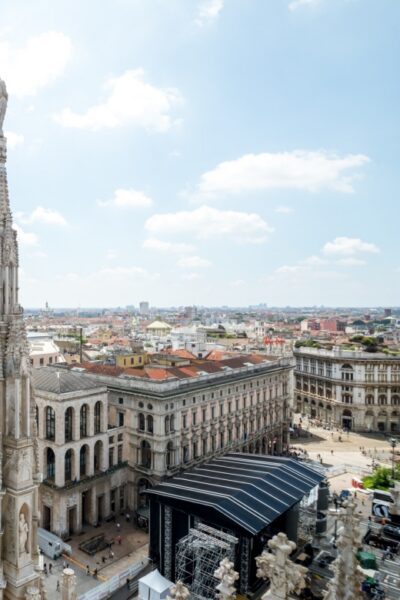
Milan Cathedral: Duomo Terraces Ticket (No Church Access)
Read our review →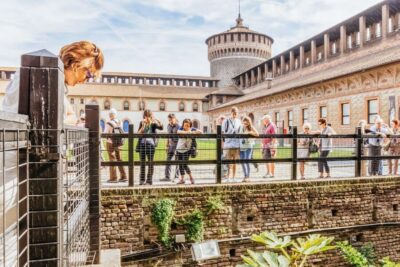
Guided Walking Tour & Last Supper Visit with Ticket
Read our review →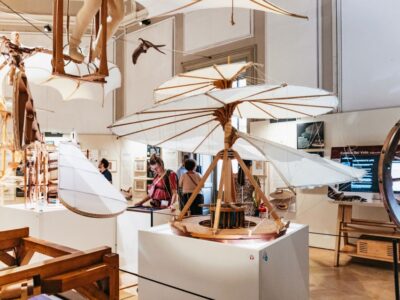
Leonardo3 The World of Leonardo Museum Entry Ticket
Read our review →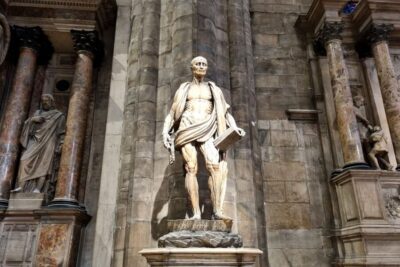
Duomo Rooftop and Cathedral Guided Tour with Tickets
Read our review →
Sforza Castle Entry Ticket with Digital Audio Guide
Read our review →
Historic Milan Tour with Skip-the-Line Last Supper Ticket
Read our review →